What Are Character Motivations in Long Fiction
Most advice about character motivation is stuck in workshop mode. It treats motivation like a clean little statement you write in chapter one, file in a profile, and trust for the next 300 pages. That's how you end up with a protagonist whose decisions work beautifully in the opening, wobble in the middle, and turn bizarre by the final act.
What are character motivations in long fiction? Not a slogan. Not a fixed desire. Not a line in a character bible that says “wants freedom” or “needs love” and then sits there gathering dust. In big manuscripts, motivation behaves more like a pressure system. It shifts when the character learns something new, loses status, gets scared, gets cornered, or finds a safer lie to believe.
At Novelium, we've seen the same failure pattern over and over in messy drafts: the writer knows the character in the abstract, but the manuscript no longer knows the character scene by scene. That gap is where continuity breaks. The issue usually isn't that the character lacks depth. It's that the writer is tracking personality while the book is demanding state, knowledge, fear, and motive under changing pressure.
Redefining Motivation for Complex Manuscripts
Most craft advice defines motivation too neatly. The character wants X because of Y. Fine for a chapter exercise. Useless once you're managing multiple turning points, split loyalties, and an 80,000-word chain of consequences.
A better working definition is this: motivation is the reason this character chooses this action now, under these conditions, at this cost. That reason can change from scene to scene without breaking the character. In fact, in strong manuscripts, it usually does.
Static motivation breaks in the middle
The clean chapter-one version of motivation tends to flatten under stress. A detective who “wants justice” may pursue a lead in one chapter to protect reputation, in the next to avoid humiliation, and later because a witness reminds her of a private failure she can't bear to repeat. Same plot line. Different active motive.
Writers Digest has noted a version of this problem directly, arguing that motivation often works as a scene-by-scene pressure response and that manuscripts fail when motivation seems to reset every chapter instead of evolving with events and stress (Writers Digest on what a character wants and why it matters).
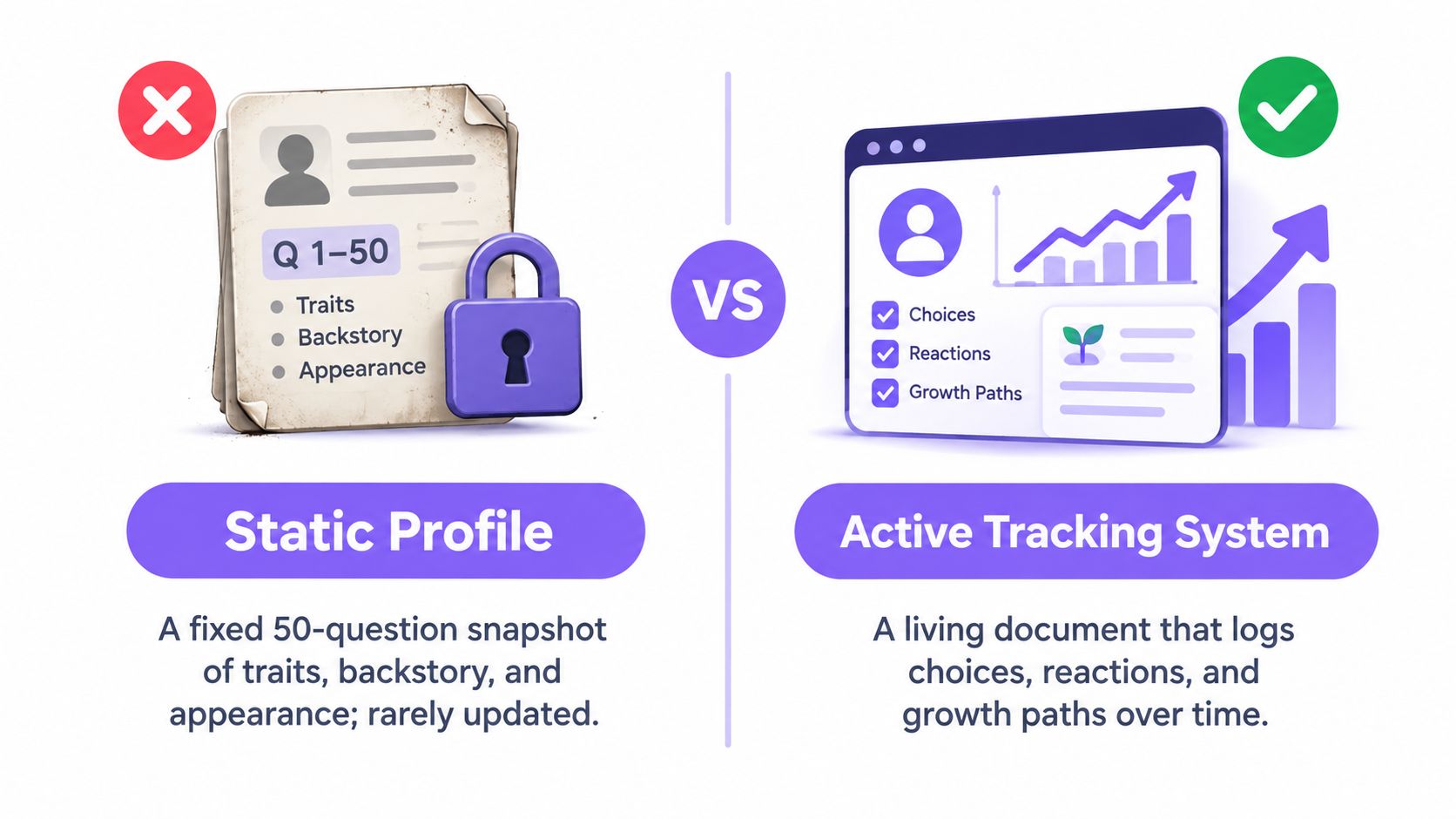
Static profiles don't break because they're shallow. They break because they're frozen, and the manuscript isn't.
The longer the book, the less useful broad labels become. “She wants approval” doesn't tell you whether she lies in chapter twelve, confesses in chapter nineteen, or walks away in chapter twenty-six. Those decisions depend on what she knows, what she fears losing, and which cost feels survivable in that scene.
Motivation is a moving variable
Most character questionnaires fail. They store background. They don't track active psychology. They tell you the wound, not whether the wound is exposed in the current chapter.
A practical motivation record for long fiction needs to answer things like this:
- Current trigger: What happened in the last scene that changed the character's calculus?
- Immediate protection: What are they trying to preserve right now? Status, secrecy, attachment, control?
- Live contradiction: What do they say they want, and what are they optimizing for?
That's the level where continuity either holds or starts leaking.
The Three Interacting Layers of Character Drive
If you're still asking only what the character wants, you're tracking the least interesting part of the machine. Narrative theory treats motivation as a multi-layer causal system that can include conscious and unconscious processes, plus goals, intentions, emotions, values, and instincts that trigger and guide behavior (Open Book Publishers chapter PDF on motivation and plot).
That sounds academic until you hit a dead chapter and realize the scene problem isn't pacing. It's motive collision.
The surface goal is only one layer
A useful practical model is external want, internal need, and central flaw. That framing matters because it explains why two characters can pursue the same plot objective for completely different reasons, and why one version feels alive while the other feels assembled from craft terminology. The trade distinction between character want vs need is basic, but still essential when you're diagnosing why a decision lands flat (Novelium's glossary on character want vs need).
The problem is that many tracking systems stop at the first layer. They log the goal. They ignore the need and the flaw. Then the writer wonders why a midpoint sacrifice feels unearned. It feels unearned because the manuscript tracked mission logic and ignored psychic cost.
What actually needs tracking
A static character sheet might note that your secondary lead is ambitious and loyal. That won't save you when chapter seventeen demands a betrayal.
Track the interacting layers instead:
| Layer | What it answers | What breaks if you ignore it |
|---|---|---|
| External want | What is the character trying to achieve in the plot? | Action sequence feels disconnected or arbitrary |
| Internal need | What emotional deficiency is the plot pressure exposing? | Arc stalls, emotional beats don't accumulate |
| Central flaw | What habitual distortion makes the character choose badly? | Turning points feel convenient instead of inevitable |
Practical rule: If a decision surprises the reader, the flaw should explain why the character made the wrong choice for a reason that felt right to them.
Writers looking for fast ways to diversify personality inputs, especially in cast-heavy speculative work, can even borrow prompts from outside prose craft. A table of new dnd 5e personality ideas is useful not because you need trait gimmicks, but because it can shake loose repetitive motivational defaults across ensemble characters.
Static Profiles Versus Active Tracking Systems
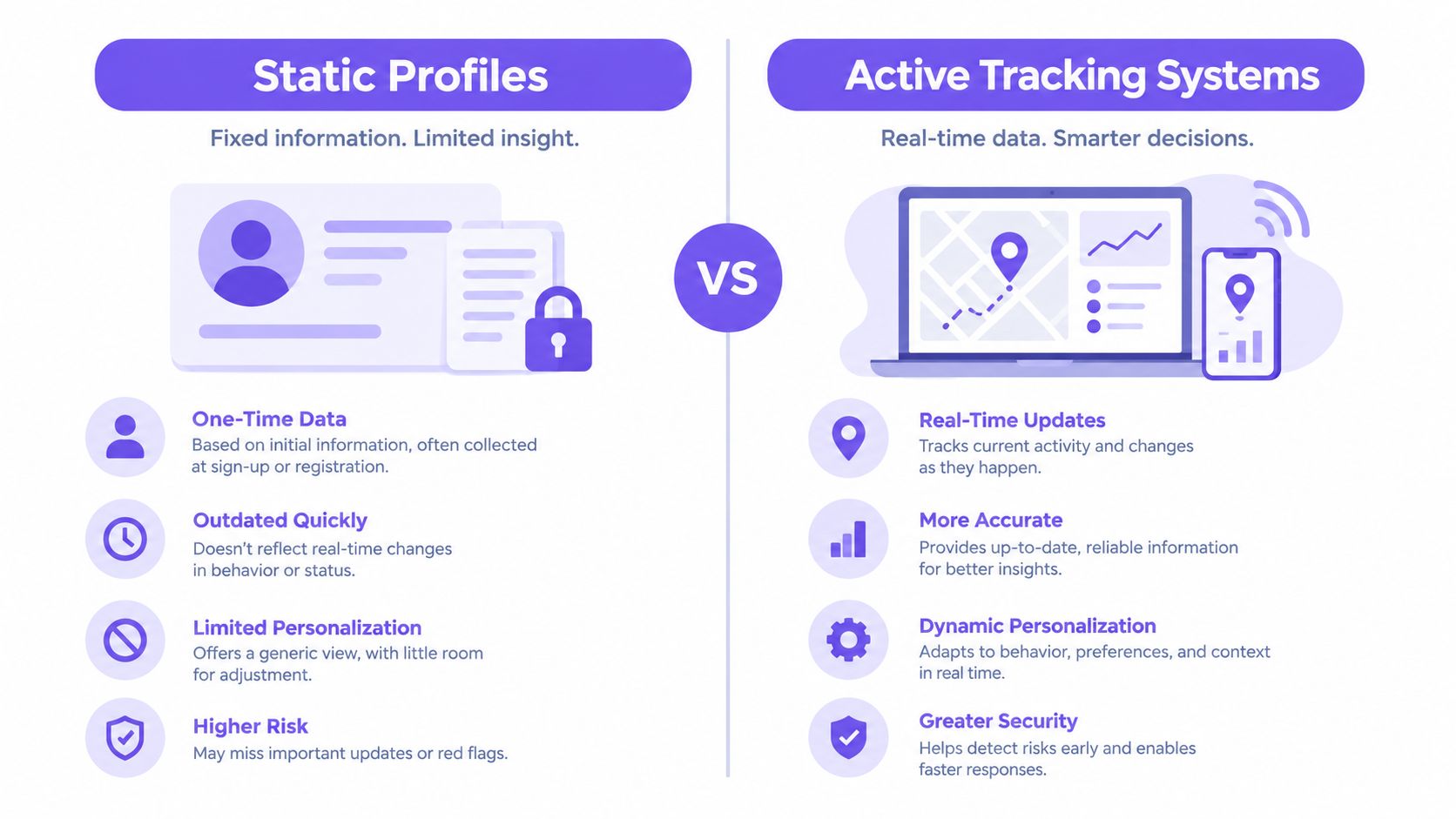
A character profile is a reference document. A tracking system is an operational document. Confusing the two causes half the “why does this feel off?” notes in developmental edits.
The profile tells you who the character was designed to be. The tracker tells you who the character currently is inside the manuscript.
Profiles store lore, trackers store state
This distinction matters because motivation becomes legible only when you separate it from goal and conflict. The goal is the external objective. Motivation is the why behind it, often rooted in backstory, fear, or wound, and readers infer it through behavior, dialogue, and context (Varsity Tutors lesson on character motivations and changes).
That means a usable tracking system has to log things a profile rarely captures well:
- Knowledge state: what the character knows in this chapter, and what they still misunderstand
- Emotional baseline: whether they enter the scene ashamed, defensive, euphoric, numb, suspicious
- Relationship position: who they currently trust, resent, idealize, or fear
- Protective motive: what they are trying not to lose, reveal, or relive
A profile can mention that the heroine fears abandonment. Fine. A tracker records that after chapter nine's betrayal she stops seeking reassurance and starts preemptively pushing people away. That is usable continuity data.
Why static docs age badly
The bigger the cast, the faster static docs become historical artifacts. They're snapshots taken before the story started. They don't know that a lie has been exposed, a sibling has become a rival, or a private shame has turned into a public threat.
A manuscript doesn't go off the rails because the backstory is thin. It goes off the rails because the current state is wrong.
That's why “character development” documents and “character tracking” systems need different jobs. One helps invent. The other helps verify.
Where Untracked Motivations Break Your Draft
The ugliest continuity problems usually aren't visual details. Eye color mistakes are annoying. Motivation mistakes rot the load-bearing beams.
The most common version is the hidden defensive motive that the manuscript never names clearly enough. A character isn't chasing a dream. They're avoiding exposure. Or preserving status. Or trying not to feel foolish again. Those are often engines of behavior, and when they aren't tracked, the draft starts producing scenes that are technically possible and psychologically false.
The multi-POV flattening problem
This gets especially bad in multi-POV work. Three viewpoint characters all start sounding distinct on the sentence level, but their decisions come from the same emotional template. Under pressure, each one withdraws, lashes out, then makes a noble confession. Different wardrobes, same nervous system.
Recent craft guidance has started addressing the gap around negative motivations, especially decisions driven by avoidance, shame, and self-protection rather than aspiration. It points out that readers notice inconsistency when hidden defensive motives drive behavior and the text never clarifies what the character is protecting or what they'd sacrifice to stay safe (Seabell on character development questions).
A few familiar failure patterns:
- The impossible reconciliation: Character A was humiliated publicly, but two chapters later trusts the offender because the plot needs the alliance.
- The counterfeit bravery beat: Character B has avoided scrutiny for half the book, then volunteers for exposure with no change in pressure or payoff.
- The emotional clone problem: In a large cast, every character interprets threat as a call to honesty, when one should evade, one should charm, and one should go cold.
What readers actually catch
Readers don't need to articulate the craft failure. They just feel the seam. The decision reads as authorial.
If the character's choice only makes sense from the outline's perspective, the manuscript hasn't earned it.
One reason this matters beyond plausibility is audience response. A 2019 study on character goal pursuit found that readers' perceptions of a character's motivation, desire intensity, and struggle increased narrative engagement, especially emotional engagement, and that being moved by the story increased intentions to share it with others (Taylor & Francis study on motivation, engagement, and sharing). Readers respond to striving they can track. Not just action. Not just stakes. Striving.
Auditing Character Decisions Under Pressure
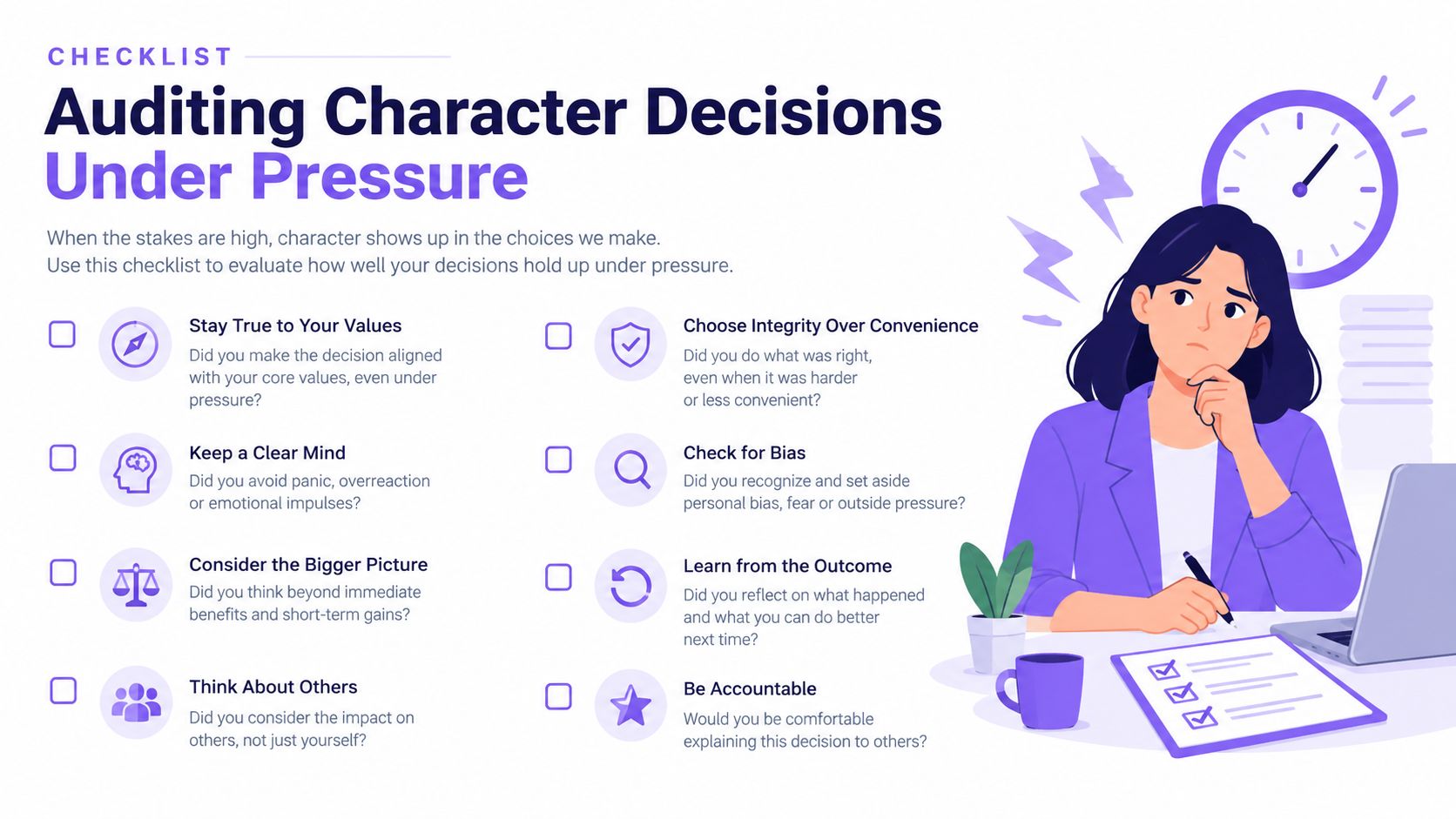
When a scene feels wrong, stop asking whether the character is “consistent.” That word causes more damage than people admit. Real people are inconsistent. Good characters are too. The useful question is whether the inconsistency is motivated, legible, and accumulated.
Run the pressure audit
A practical audit has four moving parts, and they need to be tested together.
- Want in the scene. What does the character need from this exchange right now?
- Fear in the scene. What outcome feels intolerable?
- Wound under the fear. What older pattern gives this moment extra voltage?
- Pressure on the clock. What has changed so that the easy response no longer feels available?
If one part is missing, the choice often reads thin. If all four line up, even a messy decision can feel inevitable. That's where a real character arc becomes visible on the page, not as a theme statement, but as a pattern of altered decisions under increasing strain.
Use observable evidence
Independent psychology and reading-comprehension research defines goals as a character's desires that motivate subsequent actions, and even a simple line like “the boy wanted to eat” demonstrates a visible goal-driven action chain in the text (PMC article on goals in narrative comprehension). That's the standard to use in revision. If the motive isn't observable in action, dialogue, or context, you may know it as the author, but the reader doesn't.
Audit scenes with evidence, not intention:
- Before the turn: what did the character believe they could still protect?
- At the turn: what new fact, threat, or humiliation changed their calculation?
- After the turn: what behavior proves the motive has shifted, instead of merely being explained in narration?
A character can reverse themselves. They just can't do it weightlessly.
Scaling Continuity Across Large Casts and Series
Once you're juggling a large cast or a series, memory stops being a serious system. So do scattered notes, marginal comments, and heroic confidence. You need manuscript intelligence, not vibes.
A scholarly chapter on motivation and plot makes the core issue plain: motivation operates on multiple levels at once, including explicit wants, deeper needs, and flaws that block fulfillment. That's exactly why a sheet that tracks only surface goals misses the continuity problem in long fiction (Open Book Publishers chapter on motivation and plot). The manuscript has too many active variables.
From profile management to state management
This is the operational shift. Stop asking whether your character bible is complete. Ask whether your tracking system can answer live questions without guesswork.
Can it tell you who knows the affair is real, who suspects but misreads the evidence, who still trusts the wrong sibling, and which character is making choices from panic rather than principle? If not, then your draft is relying on your memory to hold a moving psychological network across hundreds of pages.
That's where tools enter the conversation without replacing judgment. Scrivener can hold notes. Spreadsheets can log scene data. Novelium can read the draft itself and track character traits, knowledge states, relationships, and event continuity across chapters, which is a different job entirely. For long fiction, that kind of systematic tracking isn't indulgent. It's maintenance.
If your characters keep going slippery in the middle of the book, the problem usually isn't imagination. It's tracking. Novelium reads your manuscript, tracks character knowledge, relationships, and continuity across chapters, and helps you catch the motivation drift that profiles miss.