Story Plot Twist Ideas: Six That Survive 80,000 Words
Most advice on story plot twist ideas treats the reveal as the achievement. It isn't. The reveal is one scene. The damage sits in the forty scenes before it, which must still agree with the truth once that truth lands, including who knew it, when they knew it, and what they were physically able to do.
Judge a twist by its continuity cost, not its cleverness in an outline. Our founder puts it plainly, in fiction a missed detail can mean a reader closing the book. Their own novel's timeline is what went missing first. If you want a useful comparison outside prose, explore story driven gaming and watch how quickly players notice when a locked door contradicts a clue they collected an hour earlier. Novel readers do the same work.
The six structures, plus one loop, below are a stress test for an 80,000-word manuscript. A static character profile won't save any of them. What saves them is a ledger that changes scene by scene.
1. The Narrator Who Edits the Record
Your first-person narrator doesn't lie outright. They curate. A key action happens off page, a motive gets reported without its trigger, and every sentence still passes a literal fact check. That's the engine in The Murder of Roger Ackroyd by Agatha Christie (1926), where the narrator is the killer, and in Gone Girl by Gillian Flynn (2012), where two narrators compete to reshape the same marriage.
The unreliable narrator guide gives you the term. At novel length, though, this twist rarely breaks in the narrator's own chapters. It breaks in minor dialogue. A secondary character casually references the very event your narrator skipped, and suddenly that omission is load-bearing. The artifact that catches it is a knowledge log recording who knew what, and when. Novelium's Character Dashboard builds one automatically, tracking what information each character has at every moment of the story, so a contradiction surfaces before your reveal does.
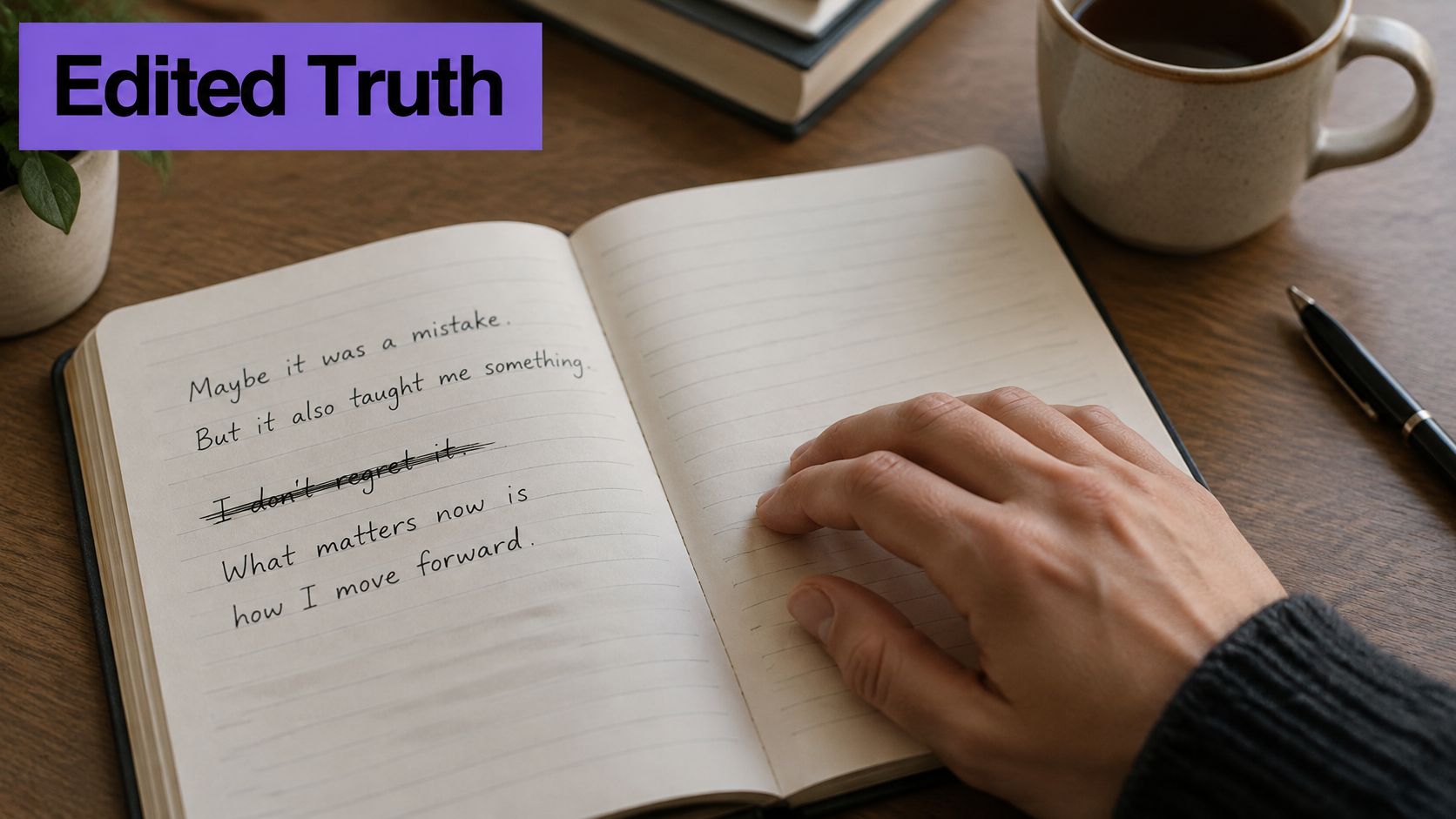
Keep two ledgers, never one. What happened and what the narrator chose to report are different documents.
Run these checks before you draft the reveal:
- Narrator knowledge log: Record what the narrator knows versus what they tell the reader, scene by scene.
- Secondary dialogue sweep: Search every other character's lines for references to skipped events.
A controlled narrative study found readers' reported surprise rose when a twist arrived in the second half, with the increase between halves reaching t(27) = 3.55, p < .005, in the Sixth Sense narrative study. Delayed reinterpretation works. Withheld logic doesn't. Manufactured reality runs on the same rule, and these AI visuals inspired by The Truman Show render it on screen: the set only fools Truman while every prop agrees.
2. Scrambled Chronology That Hides the Real Order
Cause looks like effect because you showed them backwards. Memento (2000), directed by Christopher Nolan, tells its story in reverse scene order, while Life After Life by Kate Atkinson (2013) lets repeated lives rewrite what earlier chapters seemed to settle. Both work because somebody kept the actual sequence separate from the presented sequence.
That's where most nonlinear drafts drift. You remember the intended order, so you stop checking the published order. Then a character is nineteen in a scene that must precede her eighteenth birthday party, or a building burns before the winter scene set inside it. Readers catch seasonal markers and ages faster than they catch theme.
Two Timelines or None
Use the nonlinear narrative definition if you need it, but build your own true chronology before drafting. Map each scene to both its story date and its chapter position. Treat ages, pregnancies, construction, injuries, and weather as data fields, not atmosphere you'll catch in copyedit.
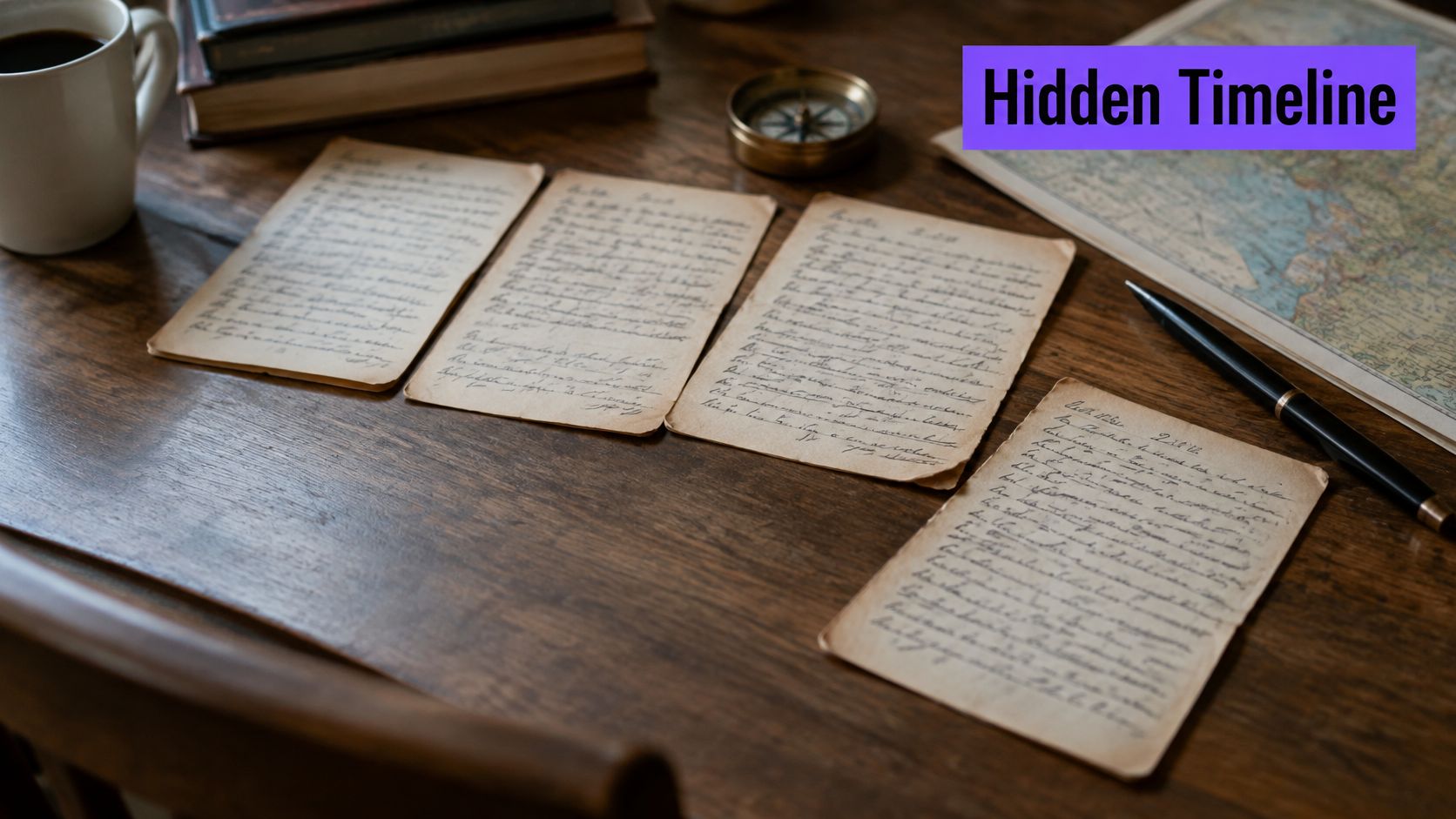
A typical failure looks small. Say a flashback shows your detective learning a suspect's maiden name. In the present-day chapter before it, she already used that name in an interview. You've just given her knowledge from the future. A dual timeline catches it. Memory won't, because you wrote both scenes correctly in isolation.
3. The Dead Character Who Was Never Dead
This one eats manuscripts. A character appears dead, the cast grieves, plans change, property moves, and then the person returns. Or the inverse, the apparently living character wasn't. The Sixth Sense (1999), directed by M. Night Shyamalan, depends on Malcolm's state being misread in every interaction, and Shutter Island by Dennis Lehane (2003) makes the protagonist's perceived reality the unstable element.
Your break point isn't the resurrection scene. It's chapters twelve through twenty. Who mourned this person, in what words, and did any of that grief create facts, a funeral, a will reading, a remarriage, an emptied apartment, that the return now has to reverse? Unreconciled mourning is the tell we keep seeing in manuscript reviews.
Life Status Is a State Field
Log life status for every named character with a date and a change reason. Then search the character's name between death and reveal and audit every mention against that field:
- Grief references: Who believes the death happened, and who might know better?
- Logistical fallout: Jobs, custody, money, and housing that moved because of it.
- Direct appearances: Dialogue or action that assumes a body in the room.
If the return doesn't cost anyone anything they gained from the death, you haven't written a twist. You've written a reset.
Make the second explanation available early, a misidentified body, a witness who only saw a fall, a medical handoff with a gap. The reader should be able to rebuild it, not just accept it because you need the character back for the finale.
4. The Stolen Identity
An impostor steps into someone else's life and the reader builds their model of that person from a dozen small signals. The Talented Mr. Ripley by Patricia Highsmith (1955) runs on Tom Ripley assuming another man's life, while Rebecca by Daphne du Maurier (1938) shows how a dead woman's established habits and relationships keep policing the living. Identity is mostly other people's expectations.
That's exactly where this twist fails, in the relationships. Your impostor can fake a signature. Can they fake twenty years of shared jokes with a sister, a specific resentment toward an old teacher, or knowing which uncle stopped speaking to the family and why? Secondary characters who knew the original will notice small things. If nobody notices anything for 300 pages, the cast looks stupid, not deceived.

Build two columns and keep them apart. What the original knows includes private memories, skills, debts, and physical history. What the impostor has learned includes only what they've stolen, observed, or been told on page. Every scene where the impostor performs competence should draw from column two.
Then plant slips deliberately. One wrong childhood detail, noticed and rationalized by a friend, does more work than five chapters of flawless impersonation. It also gives your reader something fair to re-read. Identity twists are among the story plot twist ideas readers now guess earliest, so the execution has to be in the seams, not the announcement.
5. The Double Who Was Always the Real One
Twins, clones, a stand-in, a rival who shares the role. The reader thinks they've followed one person, and the reveal says the attribution was wrong. The Prestige by Christopher Priest (1995) blurs rival magicians across two timelines, and The Double by Fyodor Dostoevsky (1846) confronts a man with a near-identical rival who starts taking his place in the world.
Doubles multiply every fact you own. Appearance, handwriting, medical history, legal status, and knowledge state now exist in duplicate, and the standard failure is silent transfer. A scar belongs to Double A in chapter three, then the same scar gets described on Double B in chapter nineteen because you were thinking of the name, not the person.
Assign Ownership Before Revision
Give each double a separate profile from draft one, even if the reader never sees both names. Then assign every scene a single owner in a separate column. During revision, attribution should never be a guess you're making from vibes and chapter order.
- Physical markers per person: Scars, eye color, dominant hand, and handwriting tracked per double, not per shared name.
- Knowledge per person: What each one witnessed personally, separated from what the other reported.
Consider a practical test. Strip the names from ten random scenes and ask whether handwriting, injuries, and knowledge alone tell you which double was present. If they don't, your reveal will read as a retroactive claim rather than a pattern the reader missed, and that's a fairness problem, not a cleverness problem.
6. The Witness Who Was the Culprit
The trusted observer has been directing events all along. The Usual Suspects (1995), with a screenplay by Christopher McQuarrie that won the Academy Award for Best Original Screenplay, sells its ending on testimony, and Murder on the Orient Express by Agatha Christie (1934) makes the witnesses collectively responsible. Every earlier statement now needs a second reading that still holds.
Fair play isn't nostalgia here, it's mechanics. The classical fair-play mystery rules require the reader to have equal access to the clues available to the detective and prohibit solving the crime through accident, coincidence, or an unmotivated confession. A witness whose chapter four testimony contradicts physical evidence you established in chapter nine isn't a red herring. It's a timeline error you've renamed.
Test the Testimony Alone
Pull the witness's full account into a standalone document. Timestamp every claim against your story chronology, then test it against the physical evidence chapter by chapter. Deliberate lies need a motive and a tell. Accurate statements need to stay accurate under the new reading.
The test that matters: Could a careful reader, given only what's on the page, have caught this person before your detective did?
That question separates planted misdirection from authorial privilege. Mystery readers forgive being fooled. They don't forgive discovering the culprit was protected by information the viewpoint character had and the text declined to mention.
7. The Loop That Remembers Too Much
The day resets, but not cleanly. Someone remembers, a wound persists, an object stays moved. Dark (2017 to 2020), created by Baran bo Odar and Jantje Friese, carries consequences forward through its time travel, and Groundhog Day (1993), directed by Harold Ramis, resets the world while its protagonist keeps every memory. Know which version you're writing before loop two.
Writers track loop events and forget carryover. So a wound from loop two surfaces unexplained in loop five, or a character grieves a death that technically hasn't happened in this iteration. Each loop is a versioned state of the world, and you need the diff between versions, not just a plot summary of each pass.

Write the rules down first. What persists, memories, injuries, objects, knowledge, emotional wear, and what resets completely. Then snapshot character states and object locations at the top of each iteration. If a detail survives the reset, a reader will eventually ask why that one did, so the answer should exist before they ask.
This is also where a planted false lead earns its keep. Check the red herring entry and apply it strictly, a loop anomaly that looks like carryover but has an in-world cause is fair misdirection. An anomaly you forgot to reconcile is just a bug wearing a costume.
How the six twist structures compare on continuity load
| Item | Primary Continuity Risk | Tracking Artifact Needed | Best Suited For |
|---|---|---|---|
| The Narrator Who Edits the Record | Omissions conflict with what other characters know or witnessed | Scene-by-scene narrator knowledge and omission log | First-person stories built around selective truth |
| Scrambled Chronology That Hides the Real Order | Dates, ages, or seasonal details contradict the true event order | Dual timeline mapping reader order to actual chronology | Suspense driven by nonlinear storytelling |
| The Dead Character Who Was Never Dead | References to the character conflict with their actual life status | Dated character life-status log | Stories that reframe an apparent death or absence |
| The Stolen Identity | The impostor reveals knowledge or habits the original alone possessed | Separate knowledge, habits, and relationship profiles | Identity mysteries centered on impersonation |
| The Double Who Was Always the Real One | Details or scenes are mistakenly attributed to the wrong double | Per-character profiles and scene ownership log | Stories featuring twins, clones, or interchangeable identities |
| The Witness Who Was the Culprit | Testimony conflicts with physical evidence or event timing | Timestamped witness statement and evidence record | Mystery plots built around trusted testimony |
| The Loop That Remembers Too Much | Carried-over details conflict with what resets between iterations | Versioned world-state snapshots and carryover rules | Repeating-loop stories with escalating consequences |
Track the Twist Before It Tracks You
A character profile is a static document, and a twist is a state change. The profile gives you eye color and childhood trauma, which is solid worldbuilding and nearly useless in chapter twenty-seven when the question is whether this person learned about the affair before or after the funeral. That second question is the one that breaks books.
What has to hold is knowledge state, life status, chronology, object location, and relationship history at a specific moment. That is a tracking system, and it has to evolve as the manuscript evolves, because a revelation in chapter thirty retroactively rewrites what every earlier scene is allowed to contain. The contradiction in chapter nine never announces itself as one until you've written the reveal. Memory doesn't survive that gap, and neither does a spreadsheet you updated in March and abandoned by June.
O. Henry understood the arithmetic early. In "The Gift of the Magi," first published in 1905, Della sells her long hair for $20 to buy a platinum chain for Jim's watch while Jim sells the watch to buy combs for her hair, as summarized in The Gift of the Magi reference. Two objects, two concealed actions, one intersection. Scale that to forty objects and twelve people acting in private and you have a modern thriller, along with its most common failure mode.
Novelium tracks what each character knows at every moment of the story and surfaces timeline impossibilities and contradictions in the sidebar as you type. It never suggests plot changes; the twist stays yours. The record underneath it stops depending on your memory at 80,000 words, which is where these story plot twist ideas either hold together or fall apart in a scene you stopped rereading months ago.
Bring your draft, outline, and character sheets into Novelium. The Character Dashboard pulls your cast straight from the text and holds each person's physical descriptions, traits, and knowledge at every point in the story. The Timeline View catches impossible sequences, and the Story Bible keeps each character's history a keystroke away while you write. It flags the deceased character whose name appears again, the witness whose account contradicts your established chronology, and the necklace that becomes a ring three chapters later, all before a beta reader finds them for you. Build the ledger now, then write the reveal as hard as you want.