Manuscript Editing Software: 10 Tools for Complex Books
Buying the most powerful prose checker is lousy advice if your actual problem is a detective who identifies the murderer before finding the evidence. Most writers shopping for manuscript editing software are trying to solve a continuity problem with a prose tool, then wondering why a character's eyes still change color between chapters twelve and thirty. A cleaner sentence doesn't make its contents true.
The category bundles four different jobs under one label: sentence polish, structural diagnosis, manuscript organization, and continuity tracking. Some products overlap, but overlap isn't the same as equal competence. A corkboard won't catch an impossible journey. A readability score won't explain why your middle drags.
Choose according to what breaks in your draft, not how many features fit on the pricing page. These tools earn their places by addressing different failures, not by pretending to replace your entire editorial process.
1. Novelium
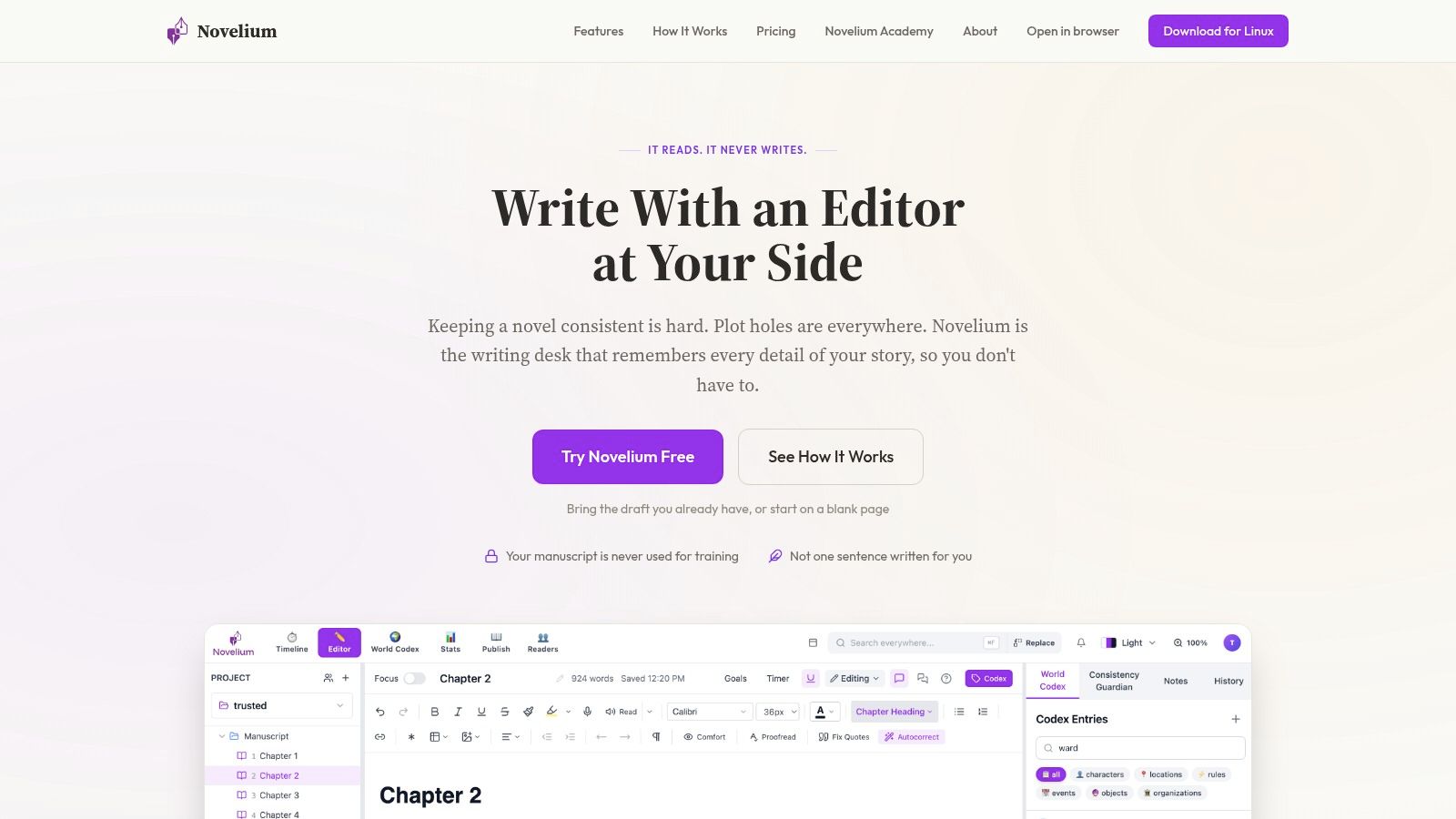
Best for the dead character who keeps talking. Our Character Tracker and World Codex automatically extract story details from the manuscript rather than asking you to maintain another spreadsheet. Characters, relationships, knowledge states, events, and timelines stay connected to the developing draft.
That distinction matters. A static profile says your detective distrusts her partner; a tracking system needs to establish when she learns he forged the report. Move that revelation, and every later reference needs checking.
Practical rule: Track what changes, when it changes, and who knows. Favorite drinks can wait.
Our checks flag timeline conflicts, character contradictions, and plot continuity issues while you write, or analyze an existing draft. Clicking a sidebar issue takes you to its location, and you can mark it for later without interrupting the scene.
Manuscripts are processed locally and kept private, with encrypted storage and no training on your writing. Word, Scrivener, and Google Docs imports preserve your existing workflow. The trade-off is editorial scope: diagnosis isn't line editing, and an apparent contradiction still needs your judgment about flashbacks, unreliable narration, or a deliberate reveal.
2. ProWritingAid
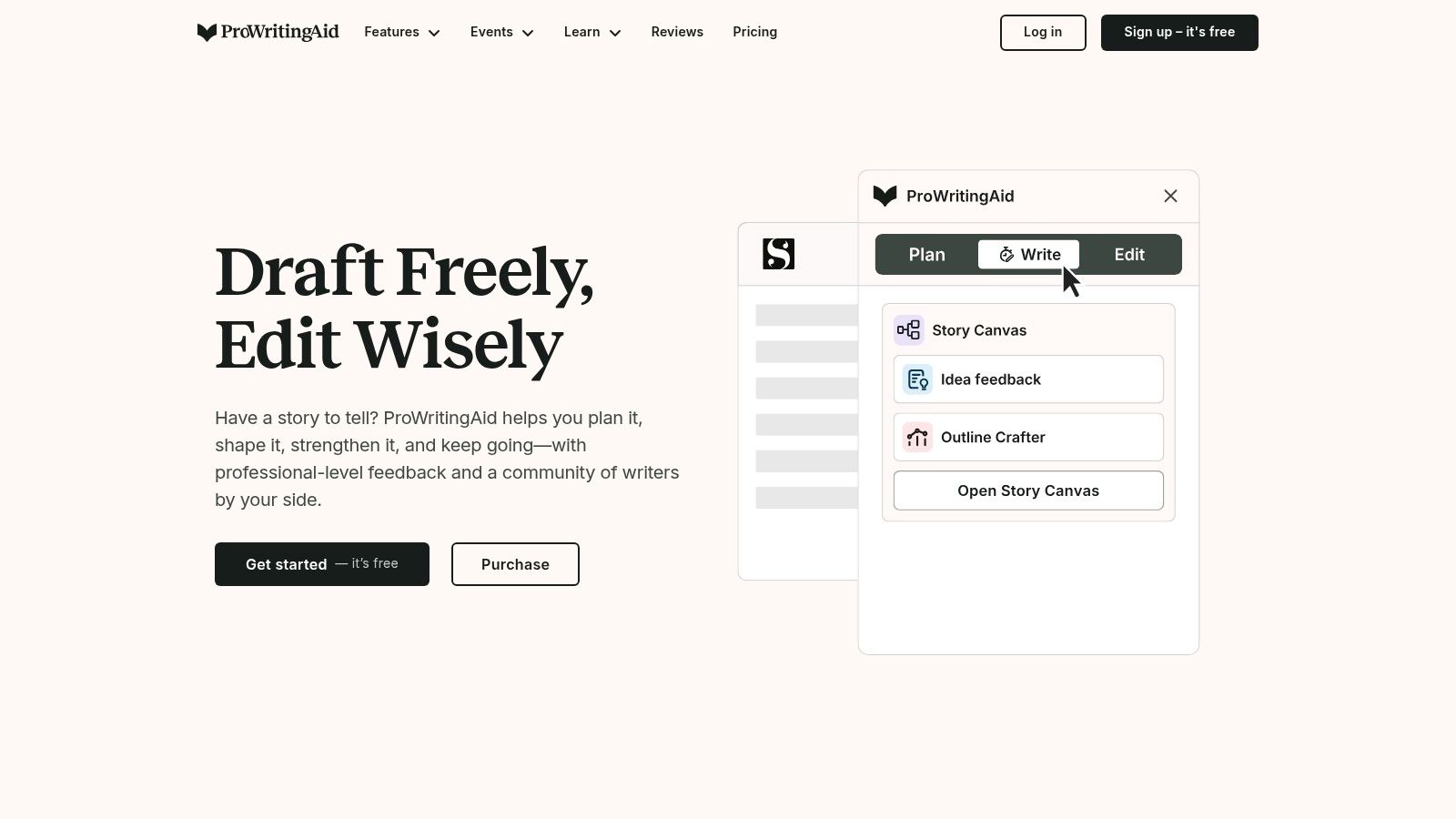
When everyone starts nodding, turning, and exhaling through every conversation, ProWritingAid offers a useful pattern-level prose pass. Its grammar, repetition, style, and readability reports help isolate habits that disappear into the wallpaper during revision.
Word, Google Docs, and Scrivener integrations reduce the paste-edit-paste routine. Separate Story Credits cover deeper manuscript, plot, character, and virtual beta-reader analyses, so don't assume every story feature comes with the standard subscription.
Run Reports With a Purpose
Choose a report for the problem you're fixing rather than opening everything and treating the resulting noise as an editorial plan. A disciplined self-editing workflow keeps repetition cleanup separate from structural decisions.
The free tier provides an entry point, but the breadth takes navigation. Text is processed through the service, so local-only manuscript handling isn't its proposition. Use it for prose diagnosis without assuming a clean report establishes continuity.
3. AutoCrit

Genre context is useful. Genre conformity is optional. AutoCrit combines fiction-oriented prose reports with pacing, dialogue, and story feedback, making it a better fit for novel revision than a checker built around office correspondence.
Its Story Analyzer addresses characters, timelines, conflict, and plot. Planning, collaboration, and formatting tools extend the workspace, while a free tier lets you sample selected functions before paying for Pro.
Treat a genre comparison as a question about reader experience, not an instruction to imitate the average book.
The useful test is whether a report helps locate a passage you can revise. If a pacing observation merely confirms that your deliberate aftermath scene is quiet, it hasn't identified a defect.
AutoCrit processes drafts online, and its feature spread requires a careful plan comparison. It's a broad fiction-editing environment, not the leanest choice for a final typo pass.
4. Fictionary StoryTeller

A beautifully polished chapter can still sit in the wrong place. Fictionary StoryTeller addresses that failure through scene-by-scene structural evaluation, visual story maps, and story-arc views rather than sentence correction.
Its framework asks you to examine plot, character, setting, pacing, and scene function. That's useful when you need a repeatable revision process instead of another vague impression that the middle feels long.
Expect Editorial Labor
You enter or review scene information. The work is part of the method, not an inconvenience the software secretly eliminates.
The trade-off is clear: you gain an organized way to interrogate scene placement, but not a hands-off continuity checker or full copyeditor. Manuscripts are hosted, and Premium adds collaboration-oriented features such as comments and tracked changes.
Use it when your revision involves moving, cutting, or reframing scenes. Don't buy structural maps to fix punctuation.
5. Novelcrafter
The problem with most character profiles isn't missing detail. It's missing change. Novelcrafter centers its workspace on a Codex for characters, places, objects, and other story elements, with mention linking and progressions for recording changes.
Automatic detection of names and aliases helps you find appearances without repeating searches. Progressions give evolving facts somewhere to live, which is more useful than overwriting an old entry and losing the previous state.
Separate Reference From Verification
A character-development document explains who someone is. A character-tracking system records what's true at a particular point in the manuscript.
The Codex supports that distinction, but a populated story bible doesn't guarantee contradiction detection. You still need to maintain meaningful entries as scenes change.
Novelcrafter is hosted rather than local-only. Optional model-based functions require a separately connected provider, adding another cost and data-handling relationship. Its strongest straightforward use is organized, searchable story knowledge.
6. Scrivener
Scrivener earns its place when revision means dismantling the book without losing the pieces. Chapters, scenes, research, and notes share a workspace; the corkboard and outliner make rearrangement manageable.
Organization is its editing advantage. Keeping the interrogation, discarded confession, and background notes accessible beats hunting through ambiguously named documents.
A Workspace Isn't an Inspector
Scrivener won't infer that moving the confession earlier gives your protagonist knowledge she shouldn't yet possess. The continuity-versus-organization comparison matters because these tools solve different problems, even when both display your chapters.
The desktop license appeals if you dislike subscriptions, but setup and compilation take learning. Platform-specific licenses and separate mobile arrangements also deserve attention before you commit.
Keep independent backups regardless of how neatly the binder is organized. A well-arranged project is still a file you need to protect, and research notes aren't automatically verified manuscript facts.
7. Dabble
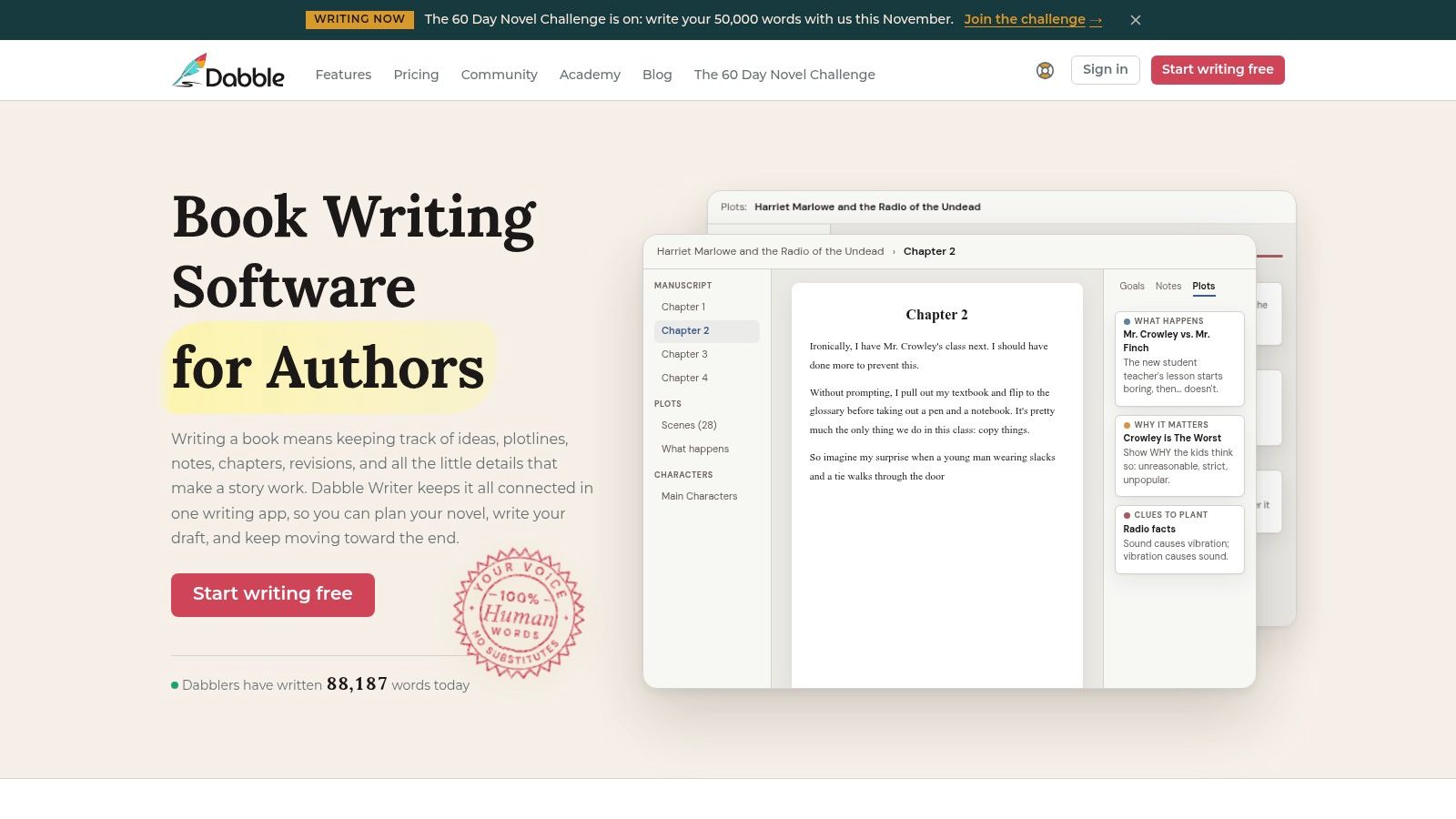
If your recurring failure is losing track of the working draft across devices, Dabble deserves attention before another analysis subscription. Its browser-based workspace combines autosave, cloud backup, drafting, and planning.
The Plot Grid, story notebook, and character profiles keep reference material near the text. The Author plan adds comments, tracked changes, advanced grammar and style checking, and read-aloud, alongside support for reader and editor feedback.
Pay for the Workflow You'll Use
Those features make sense if you want drafting and review together. They're less compelling if your existing workspace already handles organization and you only need manuscript diagnostics.
Subscription costs continue beyond the revision you bought it for, although a lifetime Author option is available. Editing functions also sit higher in the plan structure.
Cloud backup addresses file resilience, not narrative truth. A safely saved scene can still contain the wrong witness, date, or murder weapon.
8. Grammarly
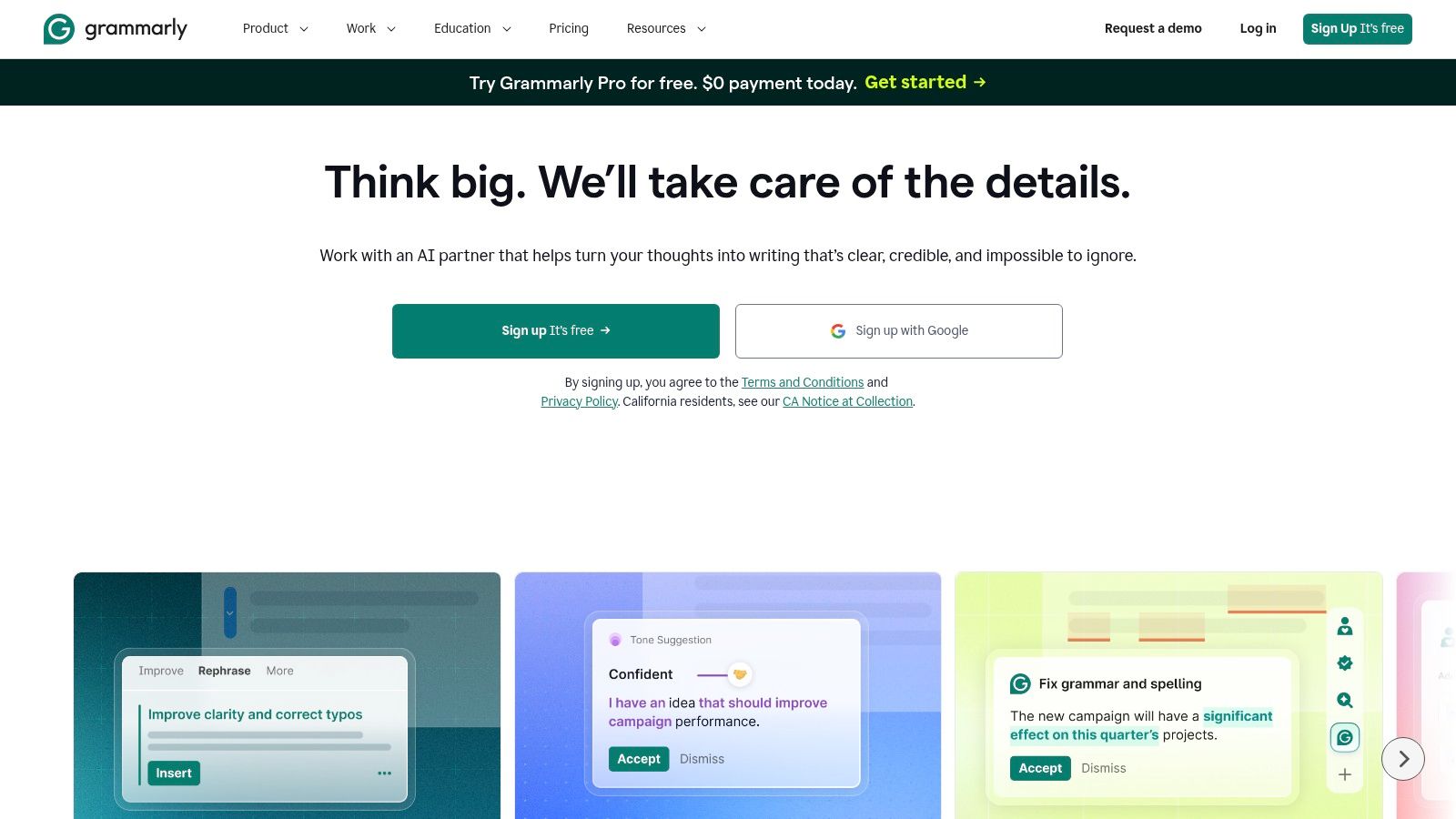
Your query letter and your unreliable narrator shouldn't receive identical editorial treatment. Grammarly is useful for surface corrections across writing environments, including spelling, punctuation, grammar, clarity, and tone.
That breadth makes it convenient for synopses and publishing correspondence as well as manuscript passages. The human-reviewed writing assistant overview provides another product reference, but the decision still turns on whether general-purpose suggestions suit your prose.
A grammatical sentence can be factually impossible inside your novel. No amount of punctuation checking resolves that.
Review dialogue suggestions individually. Fragments, evasions, repetitions, and nonstandard syntax can be characterization rather than mistakes.
Free access handles basic checking, with additional functions in Pro. What you don't get is fiction-specific structural diagnosis or whole-book continuity tracking. Keep it in the sentence-polish lane rather than expecting it to remember who witnessed the crime.
9. Hemingway Editor
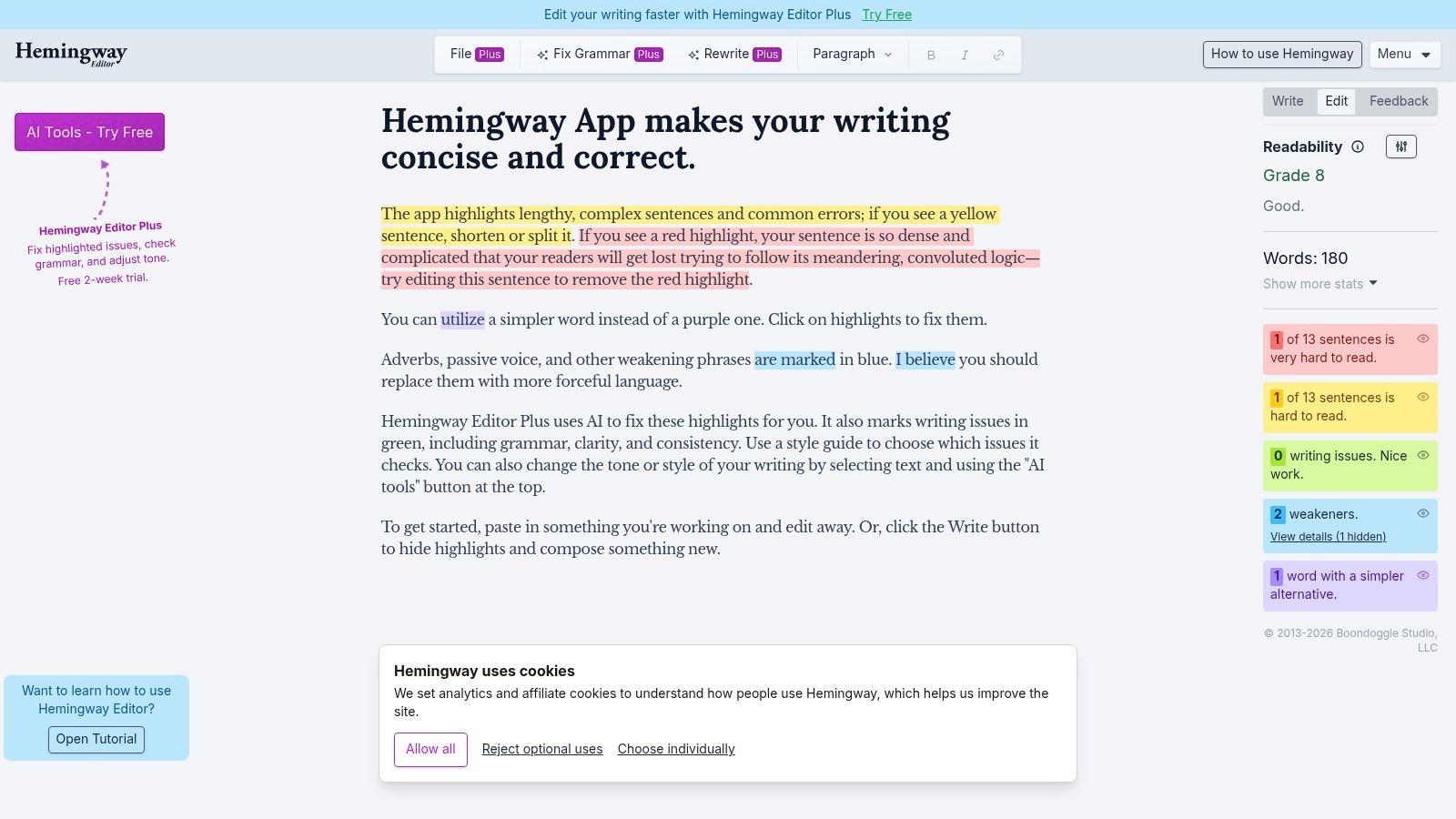
A page covered in highlights isn't necessarily a bad page. Hemingway Editor marks complex sentences, passive voice, adverbs, and potentially difficult phrasing so you can inspect them, not surrender your syntax.
Its offline desktop edition offers a focused alternative for writers who don't want to upload a draft for basic readability checking. Word import and export make it practical for a separate prose pass.
Highlights Aren't Verdicts
Use the flags to locate accidental density. Don't flatten an intentionally obsessive narrator because the editor prefers shorter sentences.
The same applies to adverb overuse: identify redundant modification, not every instance of a grammatical category.
The desktop app is a one-time purchase, but large manuscripts can run slowly, and the company recommends chapter-by-chapter work. That suits its scope. Hemingway isn't a full grammar checker, structural editor, or continuity system, and it doesn't need to be.
10. LivingWriter
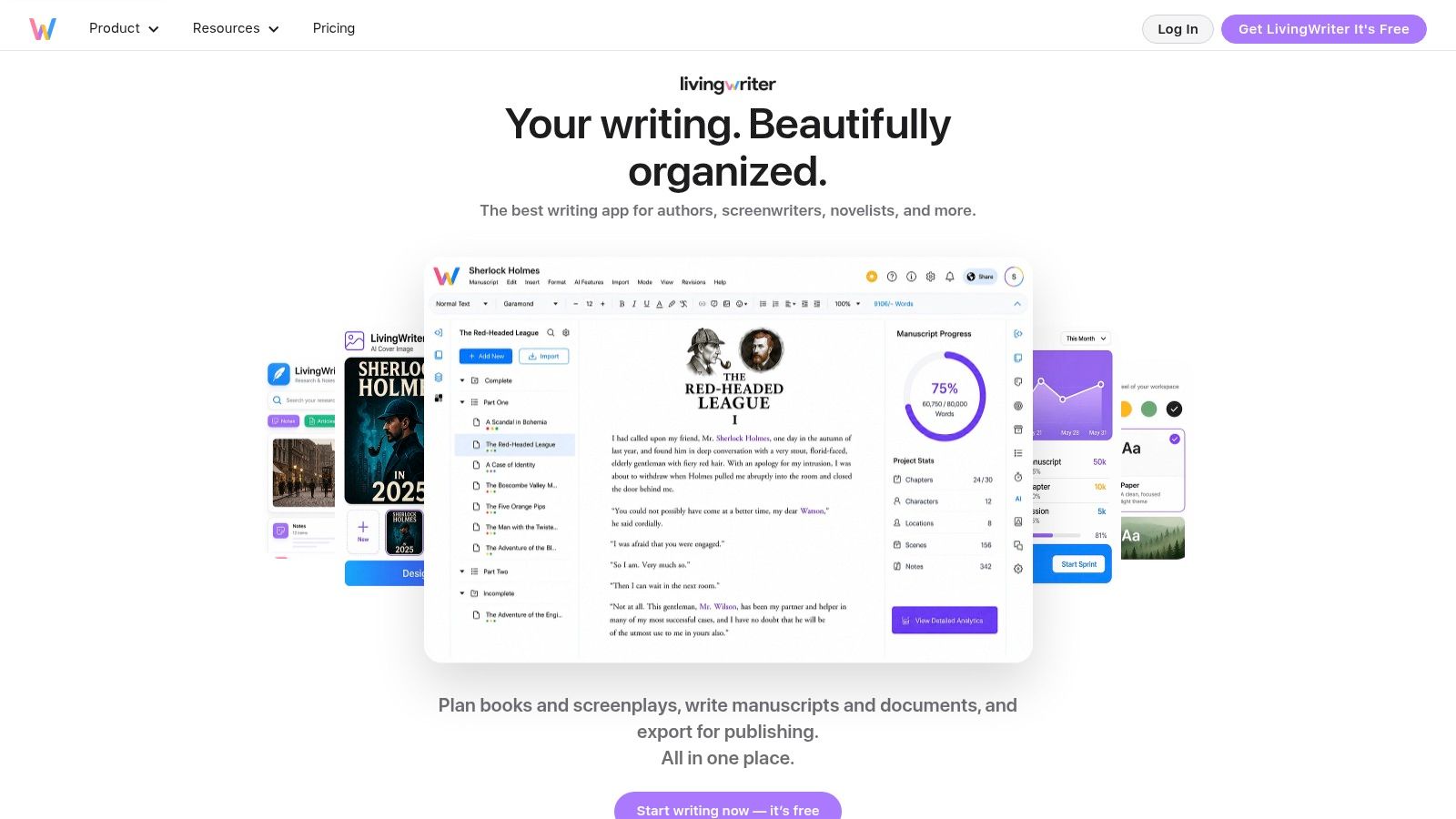
Revision gets messy when research, tasks, feedback, and the actual manuscript live in unrelated places. LivingWriter combines chapter organization, notes, goals, to-do lists, research boards, and collaboration in a browser-based workspace.
Its editing value is operational. Revision history and cloud sync help manage ongoing work, while Pro adds Word import and DOCX export.
Don't Confuse Consolidation With Analysis
Keeping a research board beside the draft can reduce searching. It doesn't establish that a changed location has been corrected in every relevant scene.
The limited free plan lets you test the environment, but a full-length novel requires more capacity. Paid tiers include additional functions, and the online workflow won't suit writers who require entirely local manuscript handling.
Choose LivingWriter if scattered project materials are slowing revision. If you already have a reliable drafting system, moving everything won't automatically improve your editorial checks. Migration is work, too.
How the Ten Tools Compare on Free Options, Continuity Tracking, and Best Use
| Item | Free Option | Continuity Tracking | Best For |
|---|---|---|---|
| Novelium | Free plan: one project and 10,000 analysis words per month | Tracks characters, relationships, events, knowledge, and timelines; flags inconsistencies | Authors seeking dedicated manuscript continuity analysis |
| ProWritingAid | Free plan with basic editing tools | Story analysis available through paid Story Credits; not its primary editing focus | Authors seeking prose-level reports and editing integrations |
| AutoCrit | Free tier with selected tools | Story Analyzer covers characters, timelines, conflict, and plot | Fiction writers combining prose feedback with story analysis |
| Fictionary StoryTeller | 7-day trial | Scene-by-scene structural evaluation; not a hands-off continuity checker | Writers revising story structure and scene function |
| Novelcrafter | Entry-level plans include a 21-day trial | Codex links story details and tracks changes; does not guarantee issue detection | Writers organizing story-world facts in a story bible |
| Scrivener | 30-day trial | No dedicated continuity tracking | Writers organizing and drafting long-form manuscripts |
| Dabble | 14-day trial without a credit card | Character profiles and planning tools; not deep continuity analysis | Novelists seeking an integrated drafting and planning workspace |
| Grammarly | Free plan | No whole-book continuity tracking | Writers checking grammar, clarity, and tone |
| Hemingway Editor | Free online editor; desktop app is paid | No continuity tracking | Writers reviewing readability and sentence complexity |
| LivingWriter | Limited free plan: one manuscript and 25,000 words | Organization tools support reference management; no dedicated continuity analysis | Writers seeking an online drafting and organization workspace |
Pick the Failure You Are Actually Fighting
No single manuscript editing software handles sentence polish, structural diagnosis, organization, and continuity equally well. Buying overlapping tools won't close a gap if none of them checks the thing you keep getting wrong.
Audit your last draft for the failure that cost the most revision time. Was it repetitive prose, a sagging sequence, conflicting files, or a revelation that broke every scene after it? Trial the tool built for that failure before adding anything else.
Keep editing stages separate. Barker Books' editing and proofreading guidance distinguishes manuscript-level work on order, repetition, transitions, and inconsistencies from checking the final file for remaining text and layout defects. A clean proof isn't evidence of a coherent timeline.
For continuity, replace static profiles with scene-linked states. Record who possesses the key, who knows about the affair, whether the wound still limits movement, and which account the narrator currently believes. Interesting worldbuilding belongs in reference material; facts that constrain subsequent action belong in tracking.
Profiles must evolve when the manuscript does. Moving a discovery changes knowledge states, not just chapter order. Changing an injury changes what a character can plausibly do afterward. Keep the earlier state visible instead of replacing it with the latest description.
Novelium's automatic character, knowledge, and timeline tracking addresses that category of error. Style tools can sharpen the sentence announcing an impossible event; structure tools can help position it. Neither job, by itself, verifies whether the event can happen.
Choose the missing capability, not the longest feature list.
Novelium's Character Tracker and World Codex automatically track details across your manuscript, flagging continuity problems without rewriting your prose. Bring your existing draft to Novelium and start free to check the characters, knowledge states, and timelines your prose tools weren't built to follow.