Demons with Black Eyes: 7 Archetypes for Novelists
Readers forget the demon's backstory before they forget its eyes. Change “solid black” to “dark with a red rim” halfway through a long manuscript, and the reader may not know why the scene feels wrong, but they'll feel it. The popular advice is to settle on a striking image and trust yourself to remember it. That works until the antagonist keeps returning across an 80,000-word draft, through multiple points of view, disguises, rumors, and increasingly confident descriptions.
Treat demons with black eyes as continuity problems, not a museum of myth. Each archetype below gives you a different variable to track: appearance, identity, bargains, sightings, or who knows what. The fixes are practical. Log the eye description at its first appearance, record deliberate changes as events, and separate what the entity is from what characters believe it is. A demon doesn't need a complicated mythology to stay credible. It needs a consistent operating system.
1. Valak
Valak's nun-like appearance in The Conjuring 2 is useful to novelists because the face does more than decorate the antagonist. Pale, mask-like features and dark, hollow eyes signal wrongness before the entity acts. That's efficient visual storytelling, but it creates a continuity obligation: once the eyes teach readers how to recognize the threat, every later appearance has to honor that signal or explain the change.
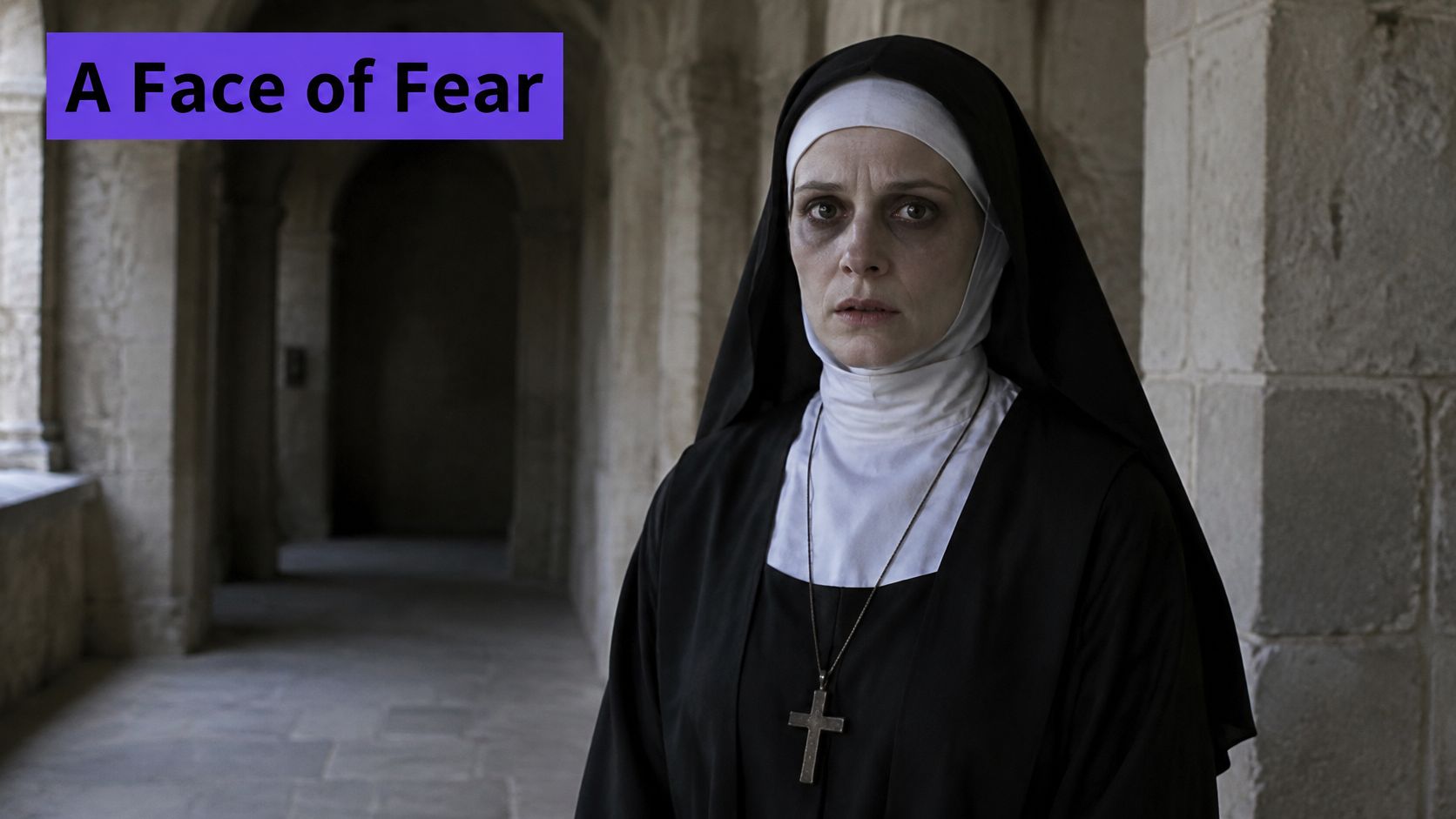
For a comparable antagonist, record the first description in concrete terms. Are the eyes entirely black, hollow-looking, or so shadowed that the iris disappears? Those are different images. “Black eyes” can mean a solid, uninterrupted surface to one character and deep sockets to another, but if the narration treats those descriptions as interchangeable, the reader has to do the continuity work for you.
Practical rule: A changed appearance needs a chapter reference and a reason, not a quiet rewrite of the character's baseline.
That matters most when the figure appears across a series or shifts form between scenes. If the entity changes from nun to something else, log the change as an event, then check whether the eyes stay constant, transform with the face, or reveal the disguise. Don't let each scene invent its own version of the monster because you're writing from memory.
For example, if a witness sees a dark-eyed figure in a reflection before meeting the nun-shaped antagonist, decide whether the reflection shows the same eyes. If it does, the trait becomes a recognition cue. If it doesn't, that difference can signal a disguise or a different entity. Either way, make the choice deliberate.
The wider Conjuring franchise offers a reminder that recurring appearances need a stable visual anchor. Watch how the character's face and eyes are described in each scene, then use that as a model for logging an antagonist whose appearance carries meaning beyond one encounter.
A short visual reference can help you hold the image steady. The video below offers a look at the character's screen presence.
2. Mephistopheles
Mephistopheles is less interesting as a pair of scary eyes than as a mind behind them. In Goethe's Faust and other versions of the bargain-with-the-devil tradition, the figure's gaze can signal calculation, attention, or practiced indifference. That makes the eyes a state marker. They tell readers what kind of attention the antagonist is paying, not merely what color the eyes are.
The tracking problem is that a bargain creates several versions of the truth at once. The demon knows what it promised. Faust knows what he thinks he agreed to. Each may suspect the other has concealed a condition. Keep those knowledge states separate in your notes, or you'll accidentally let the antagonist react to a term the protagonist hasn't disclosed yet.
A useful reference entry has three fields: the exact deal terms, what each party believes the terms mean, and what each party knows the other has understood. When the demon watches during a negotiation, that gaze can read as appraisal. When it looks away, readers may infer boredom or confidence. Either beat works only if the character's conduct aligns with its actual knowledge.
If you're drawing on several stage and screen adaptations, choose which interpretation governs your novel. Don't borrow one version's bargain rules, another's personality, and a third's visual language without logging the seams. The result usually isn't a richer villain. It's a character whose powers and motives change to serve the scene.
For a practical example, say Mephistopheles lets a character believe a bargain covers one favor, while the demon interprets it as unlimited service. Track that discrepancy at every relevant scene. If the demon later behaves as though the character knowingly accepted the broader terms, the manuscript has changed its knowledge state, not just sharpened its menace.
That distinction matters when shaping a villain whose threat comes from strategic patience. The eyes can stay dark and watchful throughout. What changes is what the character sees, understands, and chooses to reveal.
3. Azazel
With Azazel, decide what the name means in your story before deciding what the eyes mean. Is this character a fallen angel, a demon, or a role that different beings can occupy? If you leave the classification loose, later chapters may use “demon,” “angel,” and “accuser” as if they were synonyms, then build plot rules on each one. That's not productive ambiguity. It's an untracked change in the character's identity.
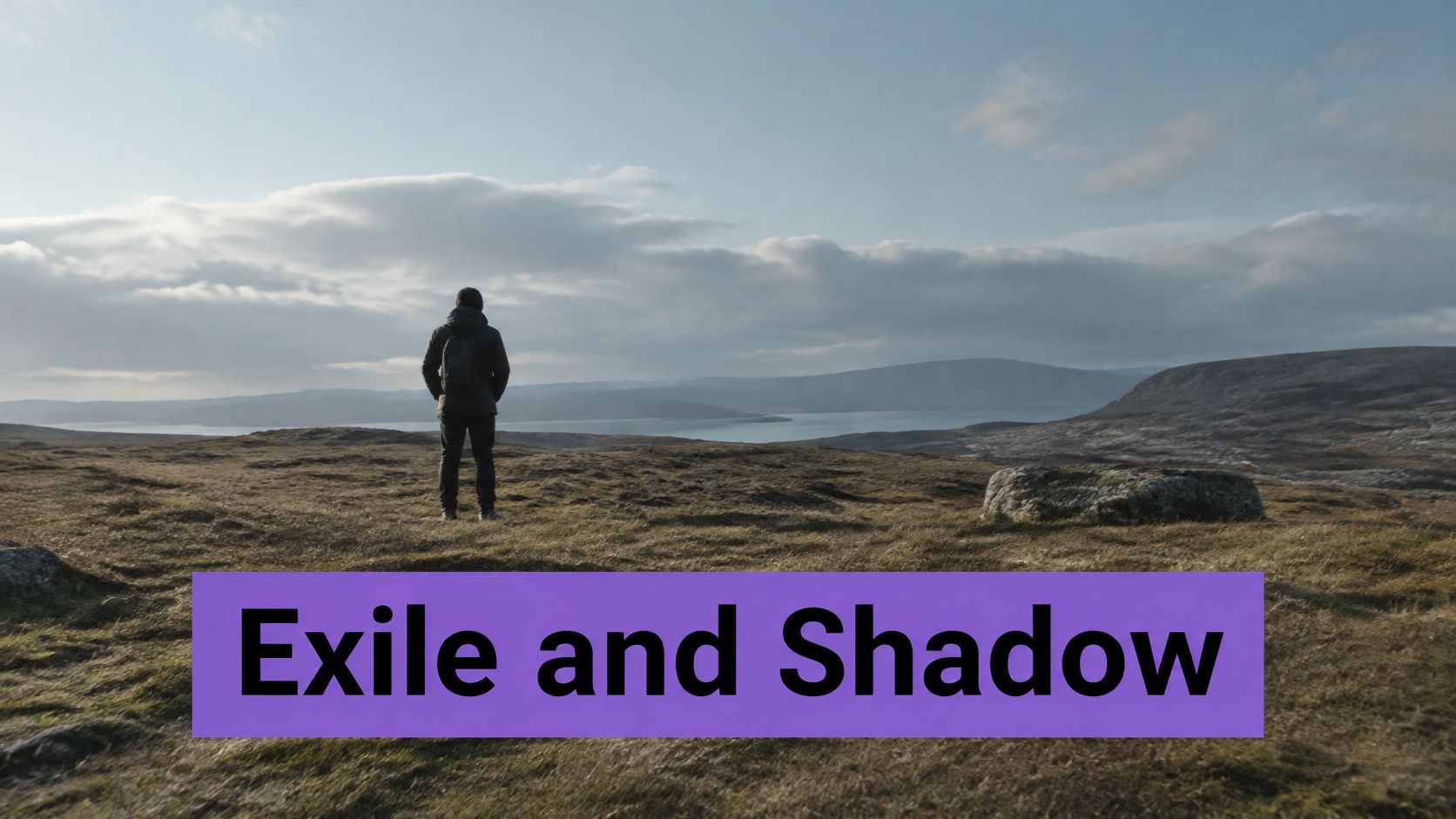
The wilderness association can make the eyes feel connected to the setting. A figure who appears against an empty horizon might have eyes that seem to absorb the surroundings, while the same figure indoors might look severe and intensely present. That variation can work, but define whether it's a lighting effect, a change in the entity, or a witness's impression. Readers will accept a deliberate shift more readily than a description that changes because the scene needs a new mood.
A codex entry should distinguish canon from invention. If your plot contradicts a tradition you're drawing on, write down the deviation and its consequences. You don't need to preserve every source's version of the figure, but you do need to know which rules your own story has adopted.
Keep the setting effect and the supernatural rule in separate notes. A place can change how a character looks without changing what the character is.
For instance, an investigator may describe Azazel's eyes as empty after finding him in a barren setting, while another character sees them as piercing in a crowded room. That difference can belong to the witnesses. If the eyes physically change, log when it happens and whether anyone else observes it. Otherwise, readers can't tell whether the prose is tracking a supernatural effect or varying its adjectives.
The broader category of mythology in fiction is useful precisely because adaptation requires choices. Record the classification, appearance, and any intentional departures together. That keeps the character's identity from drifting every time a new source or interpretation enters your drafting process.
4. Asmodeus
Asmodeus presents a problem that doesn't show up in a character profile: readers may form an image of him long before he walks onstage. Other characters mention his rank, his appearance, and what they fear he can do. Those descriptions become evidence in the reader's mind. If one witness describes a commanding figure with unnerving eyes and another casually calls him a minor spirit, the contradiction needs a cause.
Keep three things distinct in your tracking file: the character's established appearance, the rank the story treats as fact, and what each speaker claims. A frightened witness can exaggerate. A loyal follower can omit an inconvenient detail. A rival can deliberately misidentify him. Those are useful inconsistencies inside the story, but they need to be marked as competing accounts rather than accidentally slipped into the narration.
This distinction matters especially for an antagonist with multiple forms or an imposing physical design. If he has multiple heads in one account and appears as a single, humanlike figure in another, note whether the difference comes from disguise, unreliable testimony, or a change in the version of the myth your novel uses. Don't make the reader guess whether the author remembers.
Say a scholar describes Asmodeus as a demon king, but a later scene has a junior character refer to him as a mere servant. If the junior character is wrong, the scene can establish that ignorance. If the rank has changed, the story needs to show the change. A simple “who said it, where, and what they knew” record prevents an off-page reference from rewriting the antagonist.
The eyes are part of that reputation. A character who has never met Asmodeus can still describe them, but the narration should make clear whether this is received knowledge, rumor, or eyewitness evidence. That lets you use conflicting descriptions for suspense without letting your own reference points conflict by accident.
5. The Crooked Man
The Crooked Man works best when a sighting feels like evidence of a pattern. He appears just outside the frame, at a doorway, down a corridor, or in a place a character thought was empty. The danger isn't only his shape or his dark, hollow eyes. It's the growing suspicion that he has been present more often than anyone noticed.
That effect collapses if the sightings don't line up. Track each appearance as an event with a location, a time, the observer, and what the observer saw. A character who saw a silhouette shouldn't later remember its eye color unless something in the story gave them a reason to identify it. “The Crooked Man was there” and “I saw his black eyes” are different levels of knowledge.
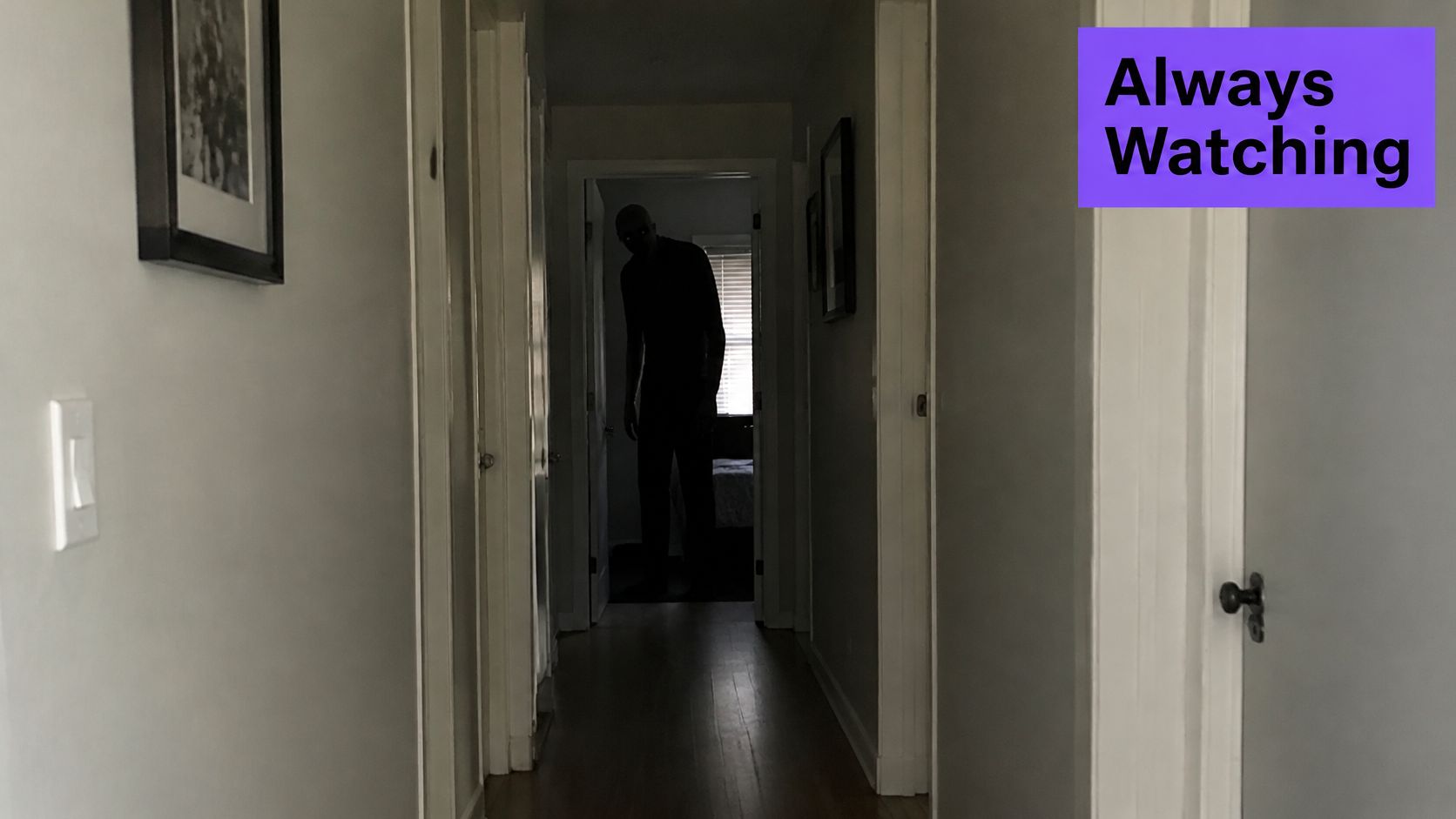
A sighting log also exposes timing problems. If the figure appears in the hallway while a viewpoint character is locked in a basement, establish how the character learns about it later. If two characters describe the same encounter differently, decide whether one is mistaken, lying, or seeing a different form. Those are plot choices. Unrecorded mismatches look like oversight.
Consider a character who catches the Crooked Man in a dark window, then sees him standing in the hallway moments later. If the eyes are visible in both scenes, readers may infer that the reflection and the figure share an identity. If the reflection has no discernible face, don't later treat it as a confirmed sighting unless the character has new evidence.
A recurring monster needs a sighting history, not just a character sheet.
Knowledge tracking carries the dread. Mark who has seen him, who has heard about him, and what details each person received. A character who learns about the eyes secondhand can be frightened by the story, but shouldn't describe them as personal observation. That boundary keeps the Crooked Man's menace intact while the cast grows and information moves through the manuscript.
6. Black-Eyed Kids
Black-Eyed Kids are best treated as modern folklore, not a documented supernatural category. The widely cited origin is Brian Bethel's alleged encounter in Abilene, Texas, in 1996. The recurring story features pale children or teenagers with completely black eyes who approach someone at a home, vehicle, or isolated location and ask to be let in or given a ride. The accounts remain anecdotal, without independently verified physical evidence, as described in the Black-Eyed Kids overview.
The distinction between folklore and fact is useful to a novelist. You can borrow the recognizable motif without presenting the supernatural explanation as established reality. If your version makes the children demons, record that reclassification and define what changes. Otherwise, the story can drift between an urban legend and a creature with rules the manuscript never settled.
The invitation mechanic deserves its own entry. Later lore often makes the request to enter a home or car the scene's pressure point, rather than having the figures attack outright. A retelling may connect that threshold rule to older vampire or demon folklore, but it remains a story rule, not evidence about an actual entity. Log who was invited in, by whom, and when. If the invitation matters, the timeline matters.
Treat each invitation as an event with consequences, not as spooky dialogue you can forget three chapters later.
For example, if one character opens the door and another only watches from a window, don't give both characters the same knowledge about what happened next. Track the exact request, the response, and what each witness observed. That keeps the fear grounded in the characters' choices rather than in a convenient shift of supernatural rules.
The motif's power depends on the contrast between vulnerable appearance and a boundary-crossing request. Keep that contrast stable even if you change the setting or the figures' voices. For a supernatural thriller, the eyes are the unmistakable signature, while the invitation is the mechanism that turns recognition into a decision.
7. Samael
Samael is a continuity test disguised as a name. Traditions and later interpretations don't always assign him the same identity, so a novel that draws from more than one version needs a governing choice. Is Samael an angel, a demon, or both in your world? Write down the answer, and update it when the story intentionally changes it. Otherwise, the classification tends to shift according to whichever label sounds most ominous in the scene.
His relationships need the same treatment. A character who is an accuser in one chapter and an ally to a demonic figure in another may be deliberately complex. But if the alliance changes, mark the event and the characters who know about it. Otherwise, dialogue will assume a relationship that the plot hasn't established.
Dark, piercing eyes can support the role of tempter or accuser, but “piercing” is not a stable visual description by itself. Decide what a viewpoint character can observe. Are the eyes solid black, dark but reflective, or intense? If you use several descriptions, identify whether they're different witnesses' impressions or changes in the character's appearance.
A worked example: Samael questions a character in one scene, then appears alongside another supernatural figure later. Track whether the first character knows about that alliance. If they don't, their reaction should reflect what they've seen, not what the author learned while drafting the later scene. Knowledge-state slips are especially easy when characters have overlapping allegiances and the manuscript uses the same labels for different roles.
An entry for Samael should hold the classification, current alliances, eye description, and the chapter where each change occurs. That's not a questionnaire. It's a record of what the manuscript has made true so far, including what remains uncertain to the characters. The distinction lets you keep the mystery while keeping the facts straight.
How each demon with black eyes compares for novel writers
| Item | Origin | Primary Source | Classification Risk | Best For |
|---|---|---|---|---|
| Valak | Conjuring franchise | The Conjuring 2 (2016) | Low; recognizable demon, but avoid overreliance on one visual cue | Recurring antagonist with a strong visual signature |
| Mephistopheles | Faust legend and European literature | Goethe's Faust, Part One (1808) | Medium; adaptations vary and may conflict | Stories about bargains, schemes, and shifting loyalties |
| Azazel | Jewish and Christian apocryphal and occult traditions | 1 Enoch | High; sources differ on his nature and role | Myth-rich fantasy across historical or modern settings |
| Asmodeus | Biblical and demonological traditions | Book of Tobit and The Goetia | Medium; depictions and rank can vary | Stories centered on infernal hierarchy and politics |
| The Crooked Man | American folklore and internet horror | Folklore and creepypasta | High; no single canonical version | Slow-burn horror and unseen threats |
| Black-Eyed Kids | Modern urban legend | Online accounts and folklore | High; usually ambiguous entities, not demons | Threshold horror and stories about invitation or consent |
| Samael | Jewish tradition and later occult writing | Rabbinic and midrashic literature | High; identity shifts between angel, accuser, and devil | Nuanced antagonists with complex alliances |
Track the Eyes, Keep the Demon Credible
A demon with black eyes stays frightening when the reader can recognize it and trust the story's rules. That doesn't mean the description has to repeat word for word. It means the variation needs a cause. “Black as ink” in one scene and “dark, reflective eyes” in another can be intentional if the second description belongs to a different witness, a disguise, or a changed state. Without that explanation, it reads like a continuity error.
The same discipline applies to classification and knowledge. A character may call the entity a demon, while the narration leaves its nature uncertain. That can be compelling. But your notes should distinguish what the story confirms from what a character assumes, and they should track when each person learns about the eyes, the rules, and the entity's relationships. Mystery on the page doesn't require confusion in your working record.
Build one entry per recurring antagonist. Log the exact eye description, the entity's classification, and every relevant knowledge state. Add a chapter reference whenever the appearance, identity, allegiance, or operating rules change. Then check each new chapter against those entries before a small discrepancy grows into a plot-level contradiction.
A spreadsheet can hold this information if you keep it current and make the fields easy to scan. The failure mode is familiar: profiles describe a character's general appearance but don't track what the character knows after each scene. Development documents tell you who a character is meant to become. Tracking systems tell you what has already happened, what each character knows now, and what the manuscript has established as true. Long drafts need both, but one can't substitute for the other.
Novelium answers questions about your own story, such as what color a character's eyes were in a given chapter, so the check doesn't depend on rereading 80,000 words. That turns continuity from a memory test into a specific question you can resolve while revising.
Novelium's Character Tracker and World Codex extract and track character details across your manuscript, including traits, knowledge states, relationships, and events. Put the demon's eyes and rules on record, then use Novelium to catch the quiet contradictions before your readers do.