7 Books About World Building Worth Reading
The best books about world building aren't the ones with the longest questionnaires or the most elaborate lore prompts. A static document can describe a kingdom beautifully and still fail to tell you which characters know the secret, whether the bridge was destroyed two chapters ago, or why a dead diplomat appears in the next volume.
Experienced novelists need different tools for different failures. One book may help you generate a living city. Another may test planetary logic, repair a weak religion, build a culture that doesn't behave like a single-minded block, or teach you to deliver history without stopping the novel for a lecture. This ranking puts practical usefulness, specificity, and manuscript-scale value ahead of attractive clutter across fantasy, science fiction, urban settings, and long series work.
A development document helps you decide what a world could contain. A tracking system records what the manuscript has established, who knows it, when relationships changed, and whether objects, events, and locations remain possible after revision. Books can improve the first problem. They can't solve the second. For a different kind of speculative reading, study Margaret Cavendish's book, then get to the books that help you build worlds writers can manage.
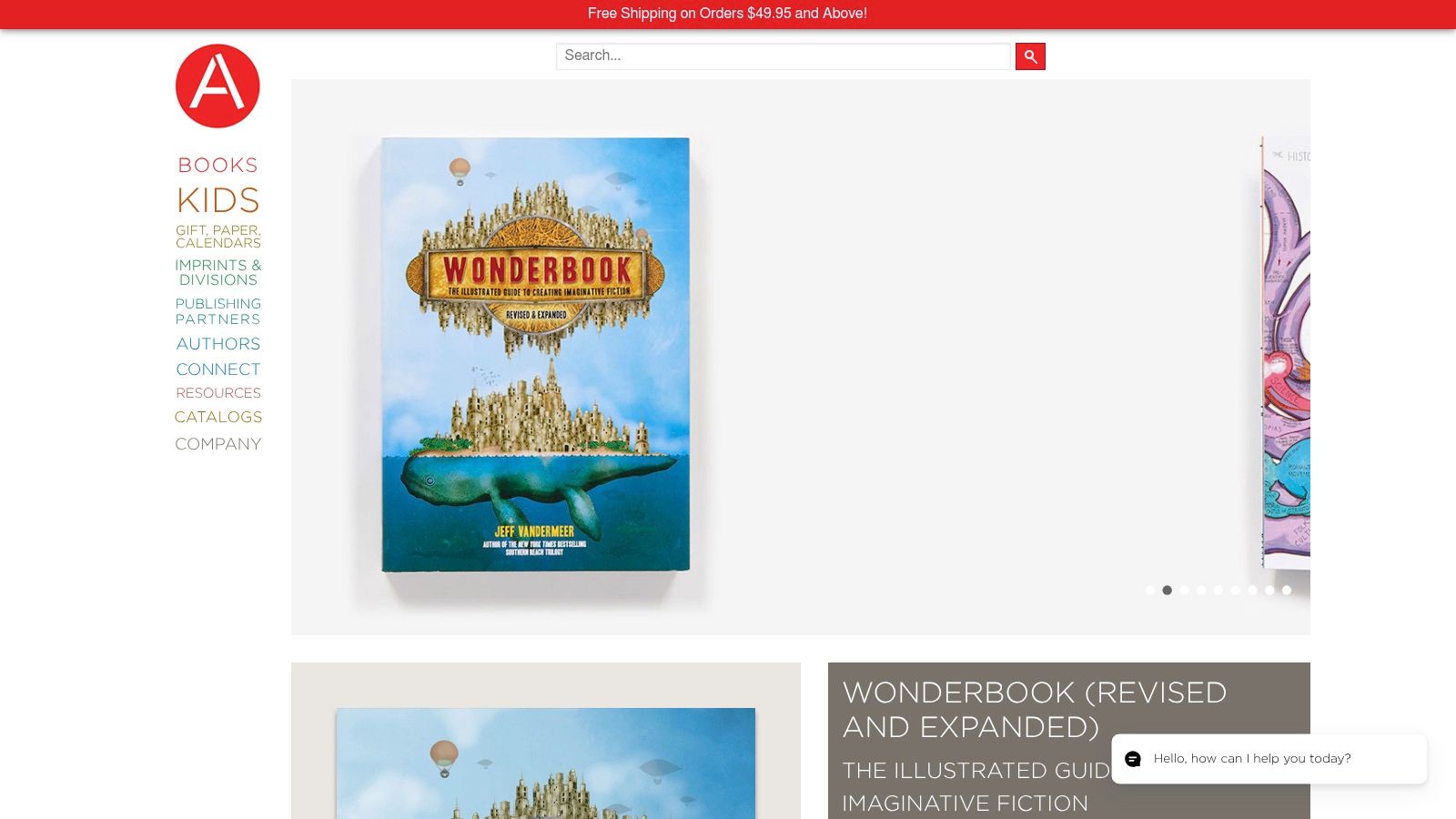
1. Wonderbook Revised and Expanded by Jeff VanderMeer
Wonderbook is the strongest choice when your setting exists as a static lore document but doesn't yet generate pressure on the characters. Jeff VanderMeer treats speculative fiction as a visual, structural, and sensory practice, using 300+ illustrations, maps, and process diagrams to make abstract decisions concrete. The revised edition adds roughly 50 pages of exercises, and contributions from writers including George R. R. Martin, Nnedi Okorafor, and Neil Gaiman widen its range.
This matters at manuscript scale because a map isn't useful merely because it looks convincing. A fantasy city map should force a choice about who controls the bridges, where the poor live, which institution can move information, and why a character can't just cross town before the next scene. In an urban speculative novel, sensory details should expose class, history, danger, and access. Wonderbook pushes you toward that kind of setting, one that creates scenes instead of decorating them.
Where it earns its place
Its essays, diagrams, maps, and annotated examples make ideation fast without reducing the work to a checklist. The book also connects invention to exposition and revision, which is where many polished drafts start to sag. A prompt may help you redesign the city's institutions, but you still need to record which characters have seen those institutions change and when.
Practical rule: Use Wonderbook to create narrative pressure, then maintain a separate record of established facts and character knowledge.
The trade-off is deliberate. This isn't a terse manual with a numbered workflow. Its art-book density requires synthesis, and readers who prefer compact bullet points may find it too expansive. That's a fair price for a book that can break you out of sterile world notes.
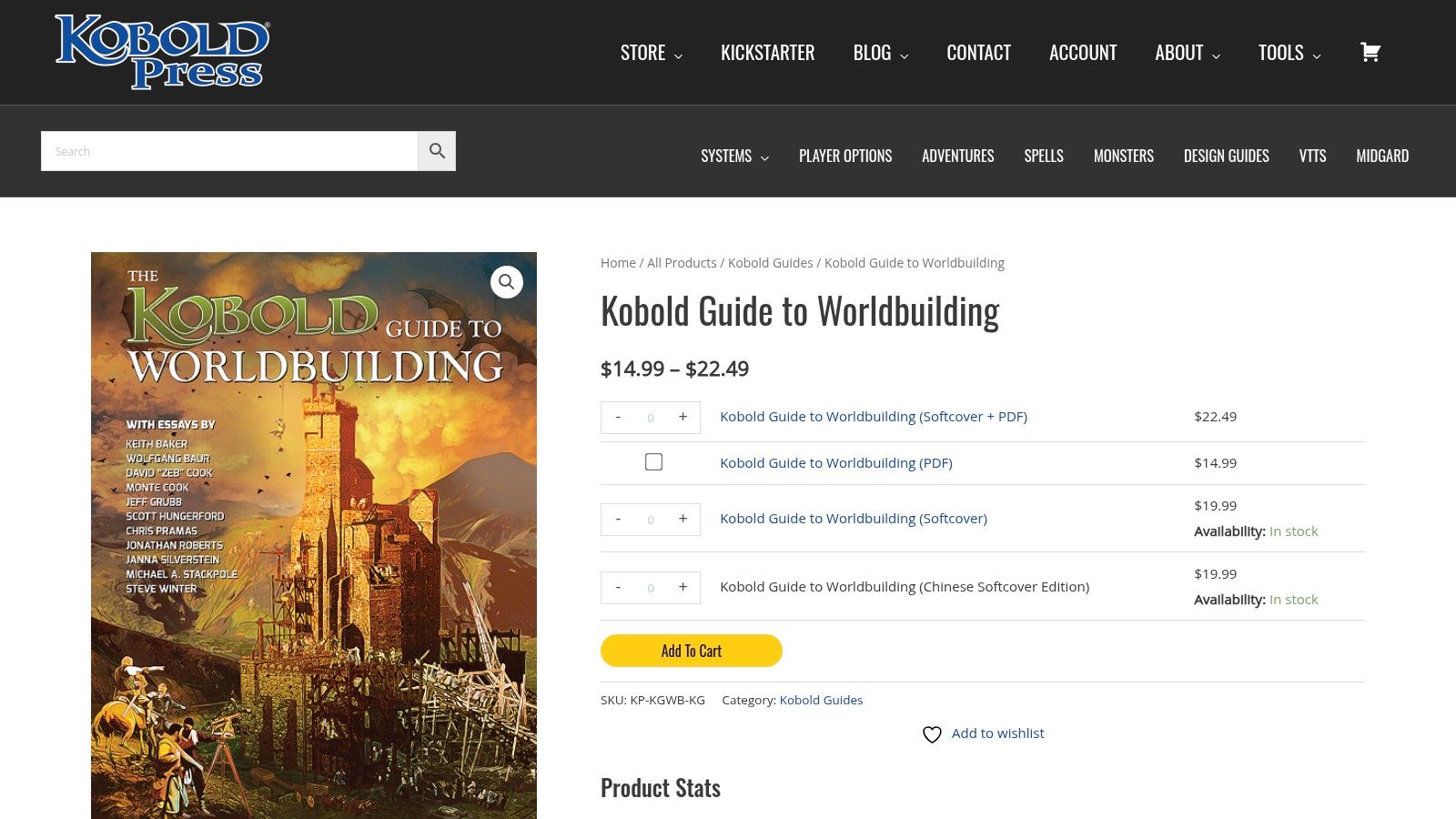
2. Kobold Guide to Worldbuilding Second Edition
A large manuscript rarely needs a complete rebuild. More often, one subsystem has stopped holding: the religion contradicts the political structure, the map makes the war impossible, or the economy can't support the city your plot requires. Kobold Guide to Worldbuilding is the best modular repair kit for that situation.
The second edition gathers essays from experienced RPG designers on pantheons, cultures, conflict, maps, history, and stakes. Its tabletop origin is visible, but that's also its usefulness. Game designers have to make settings operational. A novelist can mine one essay to repair a trade system or religious institution, then translate the result into character experience rather than exposition.
Suppose a port city's official faith claims to reject commerce, but the city survives on foreign trade. The interesting repair isn't a prettier theology entry. It's deciding which merchants reinterpret the doctrine, which officials profit from exceptions, and which characters pay the social cost. Once those decisions enter the draft, record them in worldbuilding software for fiction rather than trusting memory.
Best use and main limitation
The book's modular essays are easy to dip into, and its practical focus makes it good value for writers who need targeted solutions. It also exists in PDF, softcover, and bundle formats through the publisher. Don't expect a single through-line course. Some chapters assume a game master's needs first, so you'll have to convert setting functions into scenes, consequences, and remembered experience.
That conversion is where professional judgment matters. The book can tell you what a functioning faction needs. It won't tell you whether Mara learned the faction's secret before or after the betrayal in chapter twenty-three.
3. The Planet Construction Kit by Mark Rosenfelder
For science fiction and grounded fantasy, The Planet Construction Kit solves the problem of environmental logic. Mark Rosenfelder covers astronomy, geology, climate, biology, culture, technology, warfare, religion, magic, and maps, with online extras including color climate maps and technology timelines.
Use it when the plot depends on a world that behaves like a physical place rather than a painted backdrop. A city may claim to depend on a trade route, but the route has to survive the geography, climate, resources, and travel conditions you've established. A seasonal hazard should recur consistently if the timeline passes through the same season. Warfare, settlement, food, and political power should reflect the planet's actual constraints.
Mechanics that protect the plot
This is particularly valuable for long fiction because small physical assumptions become plot infrastructure. If a mountain range blocks travel in book one, it can't become a convenient shortcut in book three without a documented reason. If a drought drives migration, later chapters need to show its effects on agriculture, prices, conflict, and public policy rather than quietly forgetting the original pressure.
The book's presentation is functional rather than glossy, and it was originally published in 2010, but those aren't meaningful weaknesses for a mechanics-first reference. Its weakness is elsewhere: it doesn't concentrate on prose delivery. Pair it with a map-making glossary for fiction, then track the geographical facts that survive into scenes.
A believable planet isn't the same thing as a usable manuscript. Record the decisions your characters encounter, not every calculation you performed.
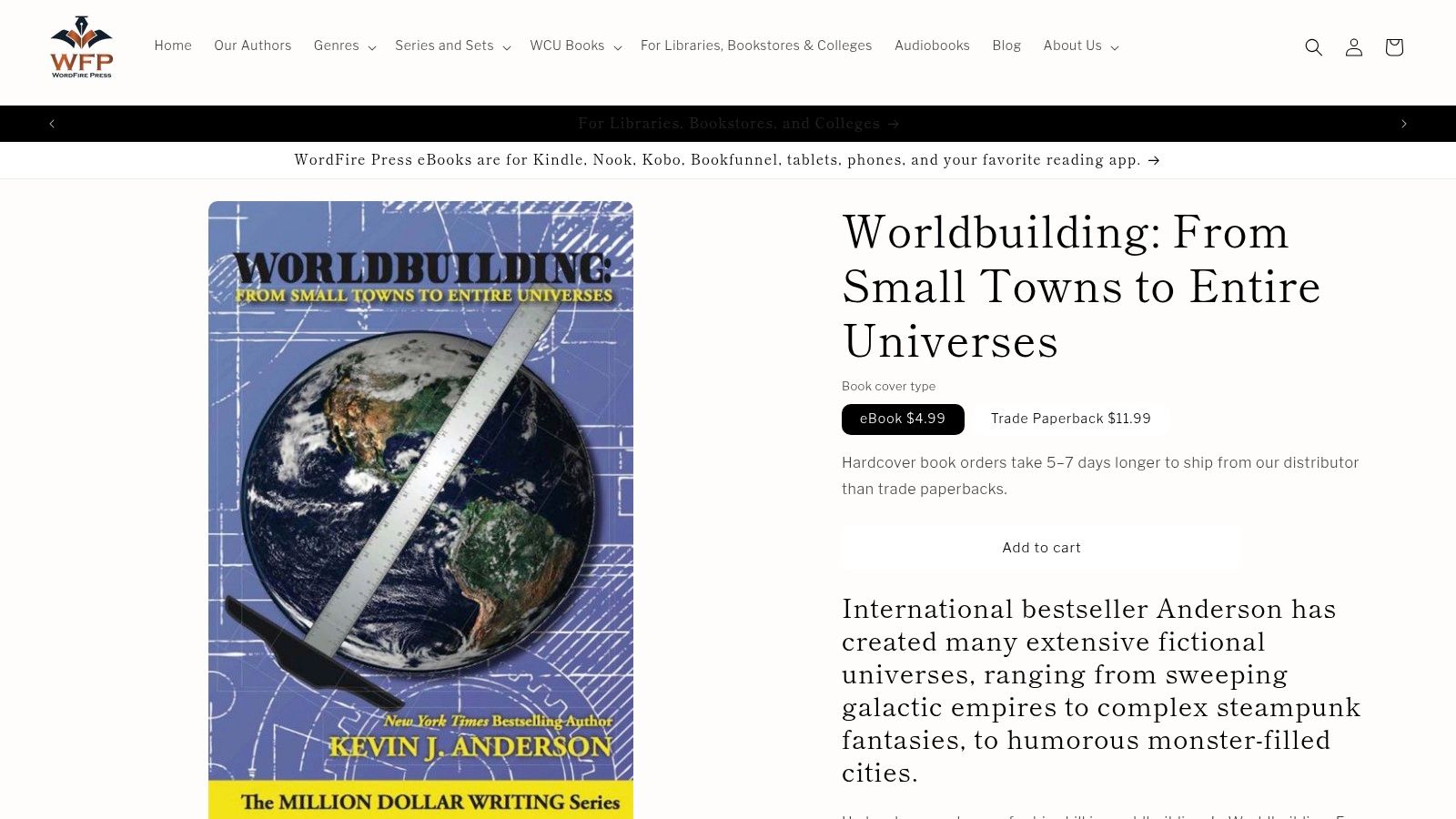
4. Worldbuilding From Small Towns to Entire Universes by Kevin J. Anderson
Kevin J. Anderson's Worldbuilding From Small Towns to Entire Universes is the efficient audit tool. Google Books lists it as a 101-page title published on October 19, 2015, covering geography, climate, politics, economics, religion, science, and history.Google Books Its compactness is the point. Established writers don't always need another deep course. Sometimes they need to find the missing pressure point before drafting.
Review a planned town, empire, or urban neighborhood with Anderson's broad framework. Does the settlement have unsupported institutions? Where do its resources come from? Who controls them? What social assumptions does the plot currently treat as universal? The book helps expose omissions before they become expensive continuity repairs.
Breadth without the research swamp
The chapters work well beside other craft books and during outlining. The publisher lists ebook and paperback formats with ISBNs, and the direct edition makes it a practical desk reference. It offers more "what to consider" than detailed research method, so don't mistake it for a specialist study of economics, religion, or climate.
Its value is speed. It gives you a broad audit without inviting months of private lore production. Turn the decisions into live manuscript records immediately. A checklist completed before drafting becomes obsolete as soon as a character changes allegiance, a city falls, or a technology acquires an unexpected cost.
Anderson's book is especially useful for a complex series because it catches the broad omissions that readers feel even when they can't name them. It won't maintain the consequences across volumes. That's your tracking problem.
5. On Writing and Worldbuilding Volume I by Timothy Hickson
Some writers have excellent setting notes and terrible delivery. Their chapters explain the communication network, trade system, or imperial hierarchy in dense paragraphs, then wonder why readers stop caring. On Writing and Worldbuilding Volume I is the best book here for converting world design into readable scenes.
Timothy Hickson connects worldbuilding to exposition, foreshadowing, character and villain design, setup and payoff, and thematic cohesion. The useful question isn't "What does this empire believe?" It's "How does that belief alter the choices available to this character in this scene?" A communication network becomes meaningful when a delayed message causes a failed alliance, not when the author explains its architecture for a page.
The book's proper job
Its examples are contemporary and approachable, and it's available in paperback and audio formats. Writers who've followed Hickson's online videos may find some overlap, but the book remains useful as a compact craft companion. It isn't a heavy reference for science, culture, or planetary mechanics. Use it after you've made those decisions, when you need to decide how the reader encounters them.
A long series creates a particular risk here. You may reveal a rule through action in volume one, then explain the same rule differently in volume three because your understanding changed. Hickson can improve the delivery. A continuity record must preserve the established version, the characters who witnessed it, and the later revisions that affect its meaning.
Keep the explanation subordinate to the consequence. If the setting matters, let somebody lose, gain, misunderstand, or choose because of it.
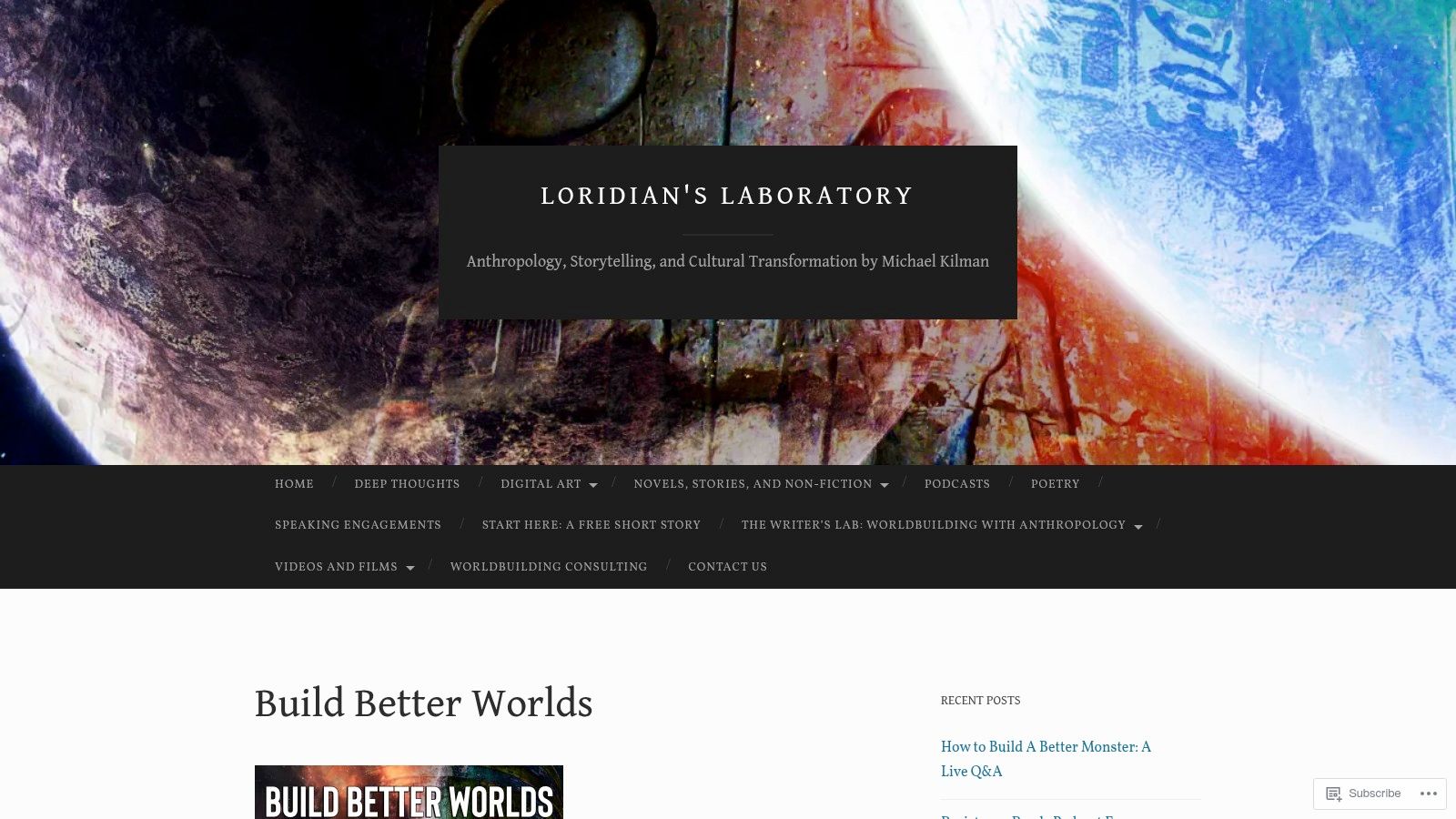
6. Build Better Worlds by Michael Kilman and Kyra Wellstrom
A nation isn't a character. A faction doesn't share one brain. Build Better Worlds is the strongest choice when your invented societies behave like tidy blocks instead of dynamic systems.
Michael Kilman and Kyra Wellstrom apply anthropological frameworks covering race, gender, class, language, religion, medicine, and cultural change. The book runs over 400 pages, which suits writers building layered societies rather than searching for a quick prompt. Its central value is cultural friction. A policy, medical practice, religious belief, or language difference should affect social groups unevenly, creating conflicts that can recur across a series.
Consider a state introducing a medical practice that one class treats as routine, another fears, and a third controls for political advantage. The setting becomes more than a list of customs. Characters inherit different assumptions, carry different risks, and revise their loyalties as events unfold. That gives a recurring cast something more durable than interchangeable national stereotypes.
Culture must survive revision
The book explains how cultures function and evolve, then maps those lessons to fiction design. Its academic tilt can feel dense, and it won't replace a physics or climate reference. The payoff is a better foundation for invented nations, communities, and institutions. For terminology and a practical framework, use this cultural worldbuilding glossary.
The manuscript risk appears after the design work. One character's position changes after a public scandal, another learns the policy is harming her family, and a third starts using the language of the opposition. If your records don't preserve those knowledge states, loyalties, and relationship changes, the culture may remain coherent while the cast resets without the shifts being tracked.
7. The Art of World Building Volume 1 Creating Life by Randy Ellefson
Fantasy writers often create an impressive species, deity, plant, or monster and then fail to give it practical consequences. The Art of World Building Volume 1 Creating Life is the specialist reference for making invented life usable in the story.
Randy Ellefson provides step-by-step prompts and downloadable templates for creating species, gods, monsters, plants, animals, and influential figures. The book belongs to a wider series with companion volumes, workbooks, coursework, signed copies, and bundles. Its focus is functional creation. A species should affect travel, food, law, medicine, labor, or character decisions. A deity should alter institutions and choices. A plant should create a logistical problem, not just a striking paragraph.
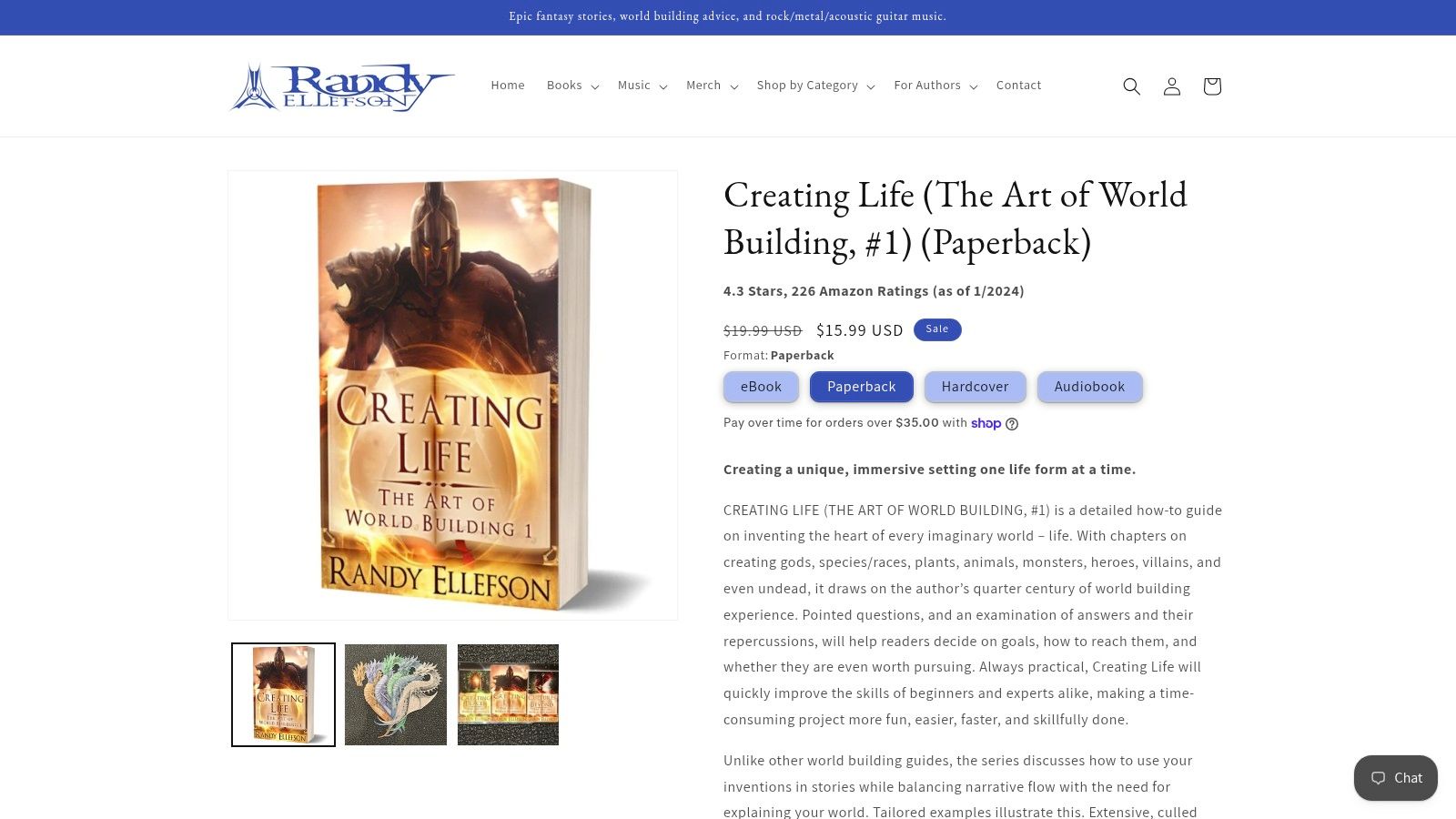
The self-published reference feel favors function over glossy presentation, and the book concentrates more on content creation than prose delivery. Pair it with a craft title if the problem is scene-level exposition. Choose it when a fantasy project needs a usable ecology, pantheon, or bestiary rather than more creature concepts.
The continuity danger of invented life
Templates help you define limits and traits. Tracking prevents those traits from drifting. A character can't suddenly survive the species-specific poison because you forgot the earlier rule. A deceased religious figure can't return in a later chapter. An object made from a rare plant can't appear in a distant city without an established supply route.
The book helps you build the material. Your manuscript system has to preserve the consequences.
7-Book Worldbuilding Comparison
| Item | 🔄 Implementation complexity | ⚡ Resources & time | ⭐ Expected outcomes | 💡 Ideal use cases | 📊 Key advantages |
|---|---|---|---|---|---|
| Wonderbook (Revised and Expanded), Jeff VanderMeer | Moderate: visual-led approach requires synthesizing exercises into a workflow | Moderate time; benefits from sketching/maps and revision sessions | High: generates vivid, narratively active settings ⭐⭐⭐⭐ | Break a static lore document into scene-driving setting (e.g., fantasy city maps → scenes) | Inspiring visuals and prompts; strong craft+imagination balance |
| Kobold Guide to Worldbuilding (2nd ed.), Kobold Press | Low–Moderate: modular essays you can dip into as needed | Low: inexpensive formats; quick lookups per topic ⚡ | Targeted: fixes specific weak areas (religion, economy, conflict) ⭐⭐⭐ | Repair or strengthen one element in a draft (e.g., patch an inconsistent religion) | Highly actionable, easy to mine; game-tested techniques adaptable to fiction |
| The Planet Construction Kit, Mark Rosenfelder | High: mechanics-first, technical checks across systems | High: time and basic technical reading; uses online supplements | Robust: produces physically plausible planets and logistics ⭐⭐⭐⭐ | Sci‑fi or grounded fantasy needing environmental/transport logic (trade, hazards) | Systematic coverage of astronomy/geology/climate; avoids “impossible planet” errors |
| Worldbuilding: From Small Towns to Entire Universes, Kevin J. Anderson | Low: concise checklist-style chapters for quick consultation | Very low time investment; built for fast audits ⚡⚡ | Practical: identifies missing pressure points quickly ⭐⭐⭐ | Pre-draft or outline audits to spot unsupported institutions or resource flows | Fast, affordable overview; breadth suited to time‑pressed writers |
| On Writing and Worldbuilding, Volume I, Timothy Hickson | Low–Moderate: focused on on-page delivery and exposition techniques | Low: short, example-rich reading; pairs with writing practice ⚡ | Effective: improves how systems are revealed in scenes ⭐⭐⭐ | Authors with strong notes who need better exposition and setup/payoff | Clear examples of exposition, foreshadowing, and character-linked systems |
| Build Better Worlds, Michael Kilman & Kyra Wellstrom | Moderate–High: applies anthropological frameworks to culture design | Moderate–High: deeper reading and analysis; best with case studies | Strong: creates believable social systems and dynamic institutions ⭐⭐⭐⭐ | Invented nations, factions, and societies that must avoid monoculture tropes | Culture-first approach; helps generate believable institutions and social friction |
| The Art of World Building, Vol. 1: Creating Life, Randy Ellefson | Moderate: step-by-step with templates for species/deities/ecology | Moderate: uses downloadable templates; part of a series ⚡ | Practical: produces usable species/pantheons for story use ⭐⭐⭐ | Fantasy projects needing ecology, pantheon, or bestiary that affect plot | Downloadable templates; series escalation for deeper worldbuilding |
Use the Books to Build, Use Tracking to Stay Consistent
Choose Wonderbook for visual ideation and settings that need to create narrative pressure. Choose the Kobold Guide when one subsystem needs repair, whether that's a religion, map, political structure, or source of conflict. Use The Planet Construction Kit for planetary logic, climate, geography, resources, and travel. Keep Anderson's Worldbuilding From Small Towns to Entire Universes nearby for broad audits before drafting.
Turn to Hickson when your world is better designed than delivered on the page. Choose Build Better Worlds when nations and factions behave like monoliths instead of internally divided cultures. Use Ellefson's The Art of World Building when species, gods, plants, and monsters need to affect plot logistics and character decisions.
Those are development needs. They answer what a world could contain and how its systems might work. They don't maintain a manuscript after the draft changes.
A tracking system records what the novel has established. It preserves who knows a secret, which relationships changed after a confrontation, where an object is located, whether an event can occur on the stated date, and whether a character's physical or cultural traits remain consistent across scenes and books. That distinction matters in an 80,000-word manuscript, where a detail introduced in the opening may govern a decision hundreds of pages later.
Extract only decisions that affect the draft. Link each decision to the chapters or scenes where it appears. After a major revision, review evolving states instead of rereading every lore note and hoping contradictions reveal themselves. A single source of truth should contain maps, timelines, rules, glossaries, and resource charts, especially as a series grows more complex.Paraquix Writers Digest also recommends maintaining an overall timeline of world events and incidents that carry from one book to the next, with checks for paradoxes and continuity errors.Writers Digest
Novelium's Character Tracker and World Codex are built for the gap between development and continuity. Its manuscript intelligence workflow automatically extracts and tracks character details, knowledge states, relationships, events, settings, rules, cultures, and world information across drafts and books. That makes it a practical next step once questionnaires and spreadsheets stop keeping pace with the manuscript.
Use the books to make better decisions. Use tracking to make sure the novel remembers them.
If your current draft contains recurring characters, shifting alliances, or world rules that change across chapters, Novelium can automatically extract and track those details through its Character Tracker and World Codex. Import your manuscript, surface continuity risks, and visit Novelium before the next revision turns a small contradiction into a series-wide problem.